
A Legacy That Will Last for Generations: Teaching Children to Safely and Responsibly Exercise Their Second Amendment Rights
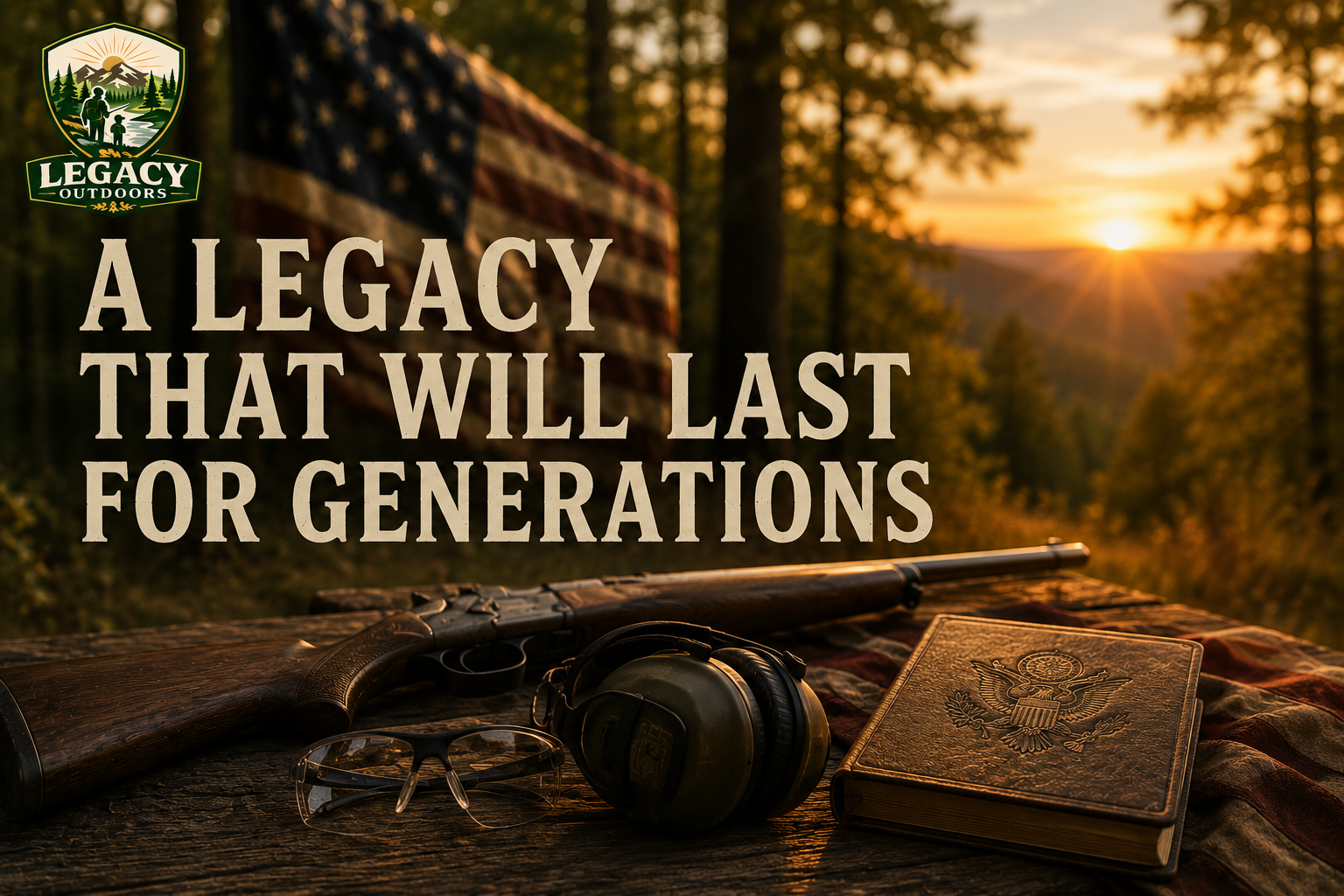
One of the greatest legacies an outdoorsman can leave isn’t a trophy buck, a favorite shotgun, or a cherished fishing hole.
It’s the knowledge, discipline, and respect passed on to the next generation.
For countless American families, that includes introducing children to the safe and lawful use of firearms. Whether on the range, in the duck blind, or during deer season, teaching young people to handle firearms responsibly is about far more than marksmanship. It’s about character, accountability, and understanding that rights come hand in hand with responsibilities.
Building Respect Before Skill
Before a child ever squeezes a trigger, they should learn to respect the tool in their hands.
Experienced hunters and shooting instructors often begin by teaching the four universal rules of firearm safety:
Always treat every firearm as if it is loaded.
Never point the muzzle at anything you are not willing to destroy.
Keep your finger off the trigger until your sights are on the target and you have decided to shoot.
Be certain of your target, what is beyond it, and what may enter the line of fire.
These principles become habits through repetition, and habits save lives.
Safety Starts at Home
Children are naturally curious, making secure firearm storage essential.
Responsible gun owners should ensure firearms are unloaded when not in use and stored in a manner that prevents unauthorized access. Ammunition should be secured separately when appropriate, and adults should regularly review household safety procedures with every member of the family.
Just as important is creating an environment where children know they can ask questions without fear or embarrassment. Open conversations often prevent unsafe decisions born from curiosity.
Learning the Law Matters Too
Responsible firearm ownership includes understanding the laws that govern it.
Hunting regulations, age requirements, supervision rules, transportation laws, licensing requirements, and local restrictions vary by state and can change over time. Families should familiarize themselves with the regulations that apply where they live and where they plan to hunt or shoot.
Teaching children to follow the law from the beginning reinforces that responsible citizenship is part of responsible gun ownership.
The Hunting Camp Classroom
Many life lessons are learned long before an animal appears.
A child sitting quietly in a deer stand learns patience. Walking safely with an unloaded firearm teaches discipline. Waiting for a clean, ethical shot teaches restraint. Recovering harvested game teaches respect for wildlife and gratitude for the food it provides.
These moments shape character as much as they develop outdoor skills.
For many families, the memories made afield become treasured stories passed from grandparents to parents and then to children.
Confidence Through Training
Formal firearms education can be invaluable.
Certified hunter education courses and supervised range instruction provide structured environments where young shooters learn safe handling, ethical decision-making, and the importance of following established procedures.
Regular practice under qualified adult supervision builds confidence while reinforcing good habits that last a lifetime.
Rights and Responsibilities
The Second Amendment occupies an important place in American history and civic life. Families who choose to teach their children about firearms often emphasize that constitutional rights carry corresponding responsibilities.
Owning or using a firearm requires maturity, self-control, and an unwavering commitment to safety. The goal is not simply to create accurate shooters but responsible individuals who understand the serious nature of the tools they handle.
That perspective helps ensure traditions are preserved with wisdom rather than carelessness.
Passing Down More Than Equipment
One day, today’s children may inherit a grandfather’s deer rifle, a mother’s favorite bird gun, or a well-worn turkey vest filled with memories.
Yet the most valuable inheritance will never be made of steel or walnut.
It will be the lessons taught in quiet moments at the range, the emphasis on following safety rules even when no one is watching, and the understanding that ethical behavior matters more than success in the field.
Those lessons become part of a family’s legacy.
A Heritage Worth Protecting
America’s outdoor traditions have always depended on responsible mentorship.
Every hunter who patiently teaches muzzle awareness, every parent who models safe storage, and every grandparent who insists on following the rules contributes to a culture where safety and respect come first.
When children are taught with patience, supervised appropriately, and encouraged to value responsibility as highly as skill, they gain more than shooting proficiency—they gain habits that can protect themselves and those around them for the rest of their lives.
That is a legacy truly worth passing down.
Free. Delivered to your inbox.