America at 250: An Outdoor Heritage Forged in Wilderness
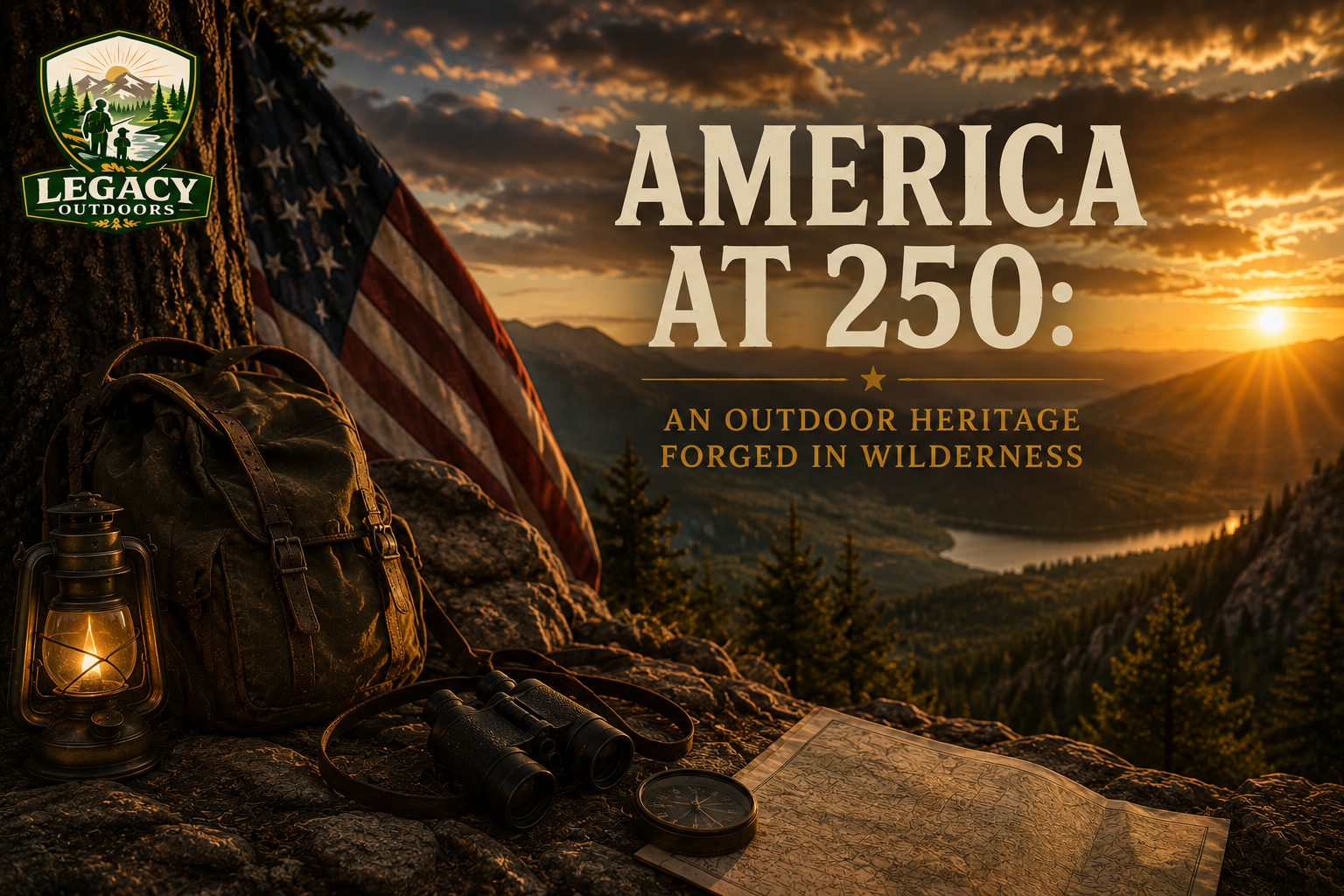
As America celebrates 250 years of independence, many will reflect on battles won, documents signed, and leaders remembered. But there is another story woven into the nation’s history—one written in mountain trails, winding rivers, prairie grass, coastal marshes, and snow-covered peaks.
It is the story of the American outdoorsman.
From the first Indigenous hunters who tracked bison across vast plains to modern families teaching children to fish in neighborhood ponds, our nation’s relationship with the land has shaped its identity. It is a heritage of stewardship, self-reliance, adventure, and gratitude for the incredible natural resources with which God has blessed this country.
The First Stewards of the Land
Long before the founding of the United States, Indigenous peoples lived across North America, developing deep knowledge of local ecosystems and wildlife.
Generations learned how to follow migration routes, harvest game responsibly, fish rivers and lakes, and use natural resources to sustain their communities. Their understanding of the land reflected centuries of observation and adaptation, leaving a lasting mark on America’s outdoor traditions.
Many of the trails, hunting grounds, and waterways that sportsmen enjoy today were first traveled by Native peoples who understood that survival depended on respecting the rhythms of nature.
Frontier Skills and the Birth of a Nation
As settlers pushed westward, outdoor skills became essential.
Hunting was not recreation for many early Americans—it was how families survived. Trapping, fishing, gathering, and farming demanded resilience and ingenuity. Rifles and bows put food on the table, while rivers and forests served as highways through an untamed wilderness.
The frontier also cultivated values still admired by sportsmen today: perseverance, responsibility, and the willingness to work hard for what was earned.
Those same principles helped shape the young republic.
The Great American Wilderness
From the hardwood forests of Appalachia to the marshes of the Gulf Coast, America offers extraordinary diversity for hunters and anglers.
The Rocky Mountains challenge elk hunters with steep climbs and thin air. The Great Plains host pronghorn and upland birds across sweeping grasslands. Southern swamps echo with turkey gobbles each spring, while northern lakes provide legendary fishing opportunities.
Each region tells a different story, yet together they form a shared outdoor heritage that unites sportsmen across state lines.
Alaska: The Last Frontier
No discussion of America’s outdoor legacy would be complete without Alaska.
Purchased from Russia in 1867, what some critics mocked as “Seward’s Folly” became one of the greatest acquisitions in the nation’s history. Its vast wilderness now encompasses towering mountain ranges, immense salmon rivers, coastal rainforests, tundra, and millions of acres of public land.
For hunters and anglers, Alaska represents the pinnacle of wild places. Moose roam willow flats, Dall sheep cling to rugged cliffs, caribou migrate across the tundra, and brown bears patrol salmon streams that teem with life.
Yet Alaska’s greatest treasure may be its reminder that truly wild landscapes still exist in America.
Conservation Through Stewardship
America’s outdoor story is not merely about harvesting game.
Hunters, anglers, conservation organizations, and wildlife professionals have played significant roles in restoring species and preserving habitat. Excise taxes on sporting equipment, license fees, and conservation partnerships have helped fund efforts that benefit wildlife and the public alike.
Healthy forests, wetlands, rivers, and grasslands ensure that future generations can experience the same opportunities enjoyed by those who came before us.
Stewardship remains one of the defining responsibilities of the American outdoorsman.
Passing the Torch
The future of our outdoor heritage depends less on regulations than on relationships.
It is built when grandparents teach grandchildren how to tie a fishing knot, when parents explain firearm safety before opening day, when mentors model ethical hunting practices, and when families pause to appreciate a sunrise before the woods awaken.
Traditions survive because someone cared enough to pass them on.
A Nation Blessed by Creation
For Christians, the American landscape offers more than recreation—it points to the majesty of the Creator.
The bugle of an elk in September, the migration of waterfowl across autumn skies, the first trout rising on a mountain stream, or the sight of a bald eagle soaring above a river all remind us that creation declares the glory of God.
As we celebrate 250 years of American independence, we can also give thanks for the extraordinary natural heritage entrusted to our care.
The Legacy of the Outdoorsman
Flags will wave, fireworks will light the night sky, and communities across the country will commemorate the nation’s history.
But another celebration will quietly unfold at the same time.
A father will help his child cast a fishing line for the first time.
A grandfather will share stories from a deer stand built decades earlier.
A young hunter will learn that patience matters more than haste.
An angler will release a trophy fish so someone else can experience the same thrill.
These moments are the heartbeat of America’s outdoor heritage.
They connect us not only to the nation’s past but to the generations yet to come.
As America marks 250 years, may we continue to cherish the woods, waters, mountains, and prairies that have shaped our history—and may we faithfully pass them on, protected and appreciated, to those who will celebrate the next 250.
Free. Delivered to your inbox.