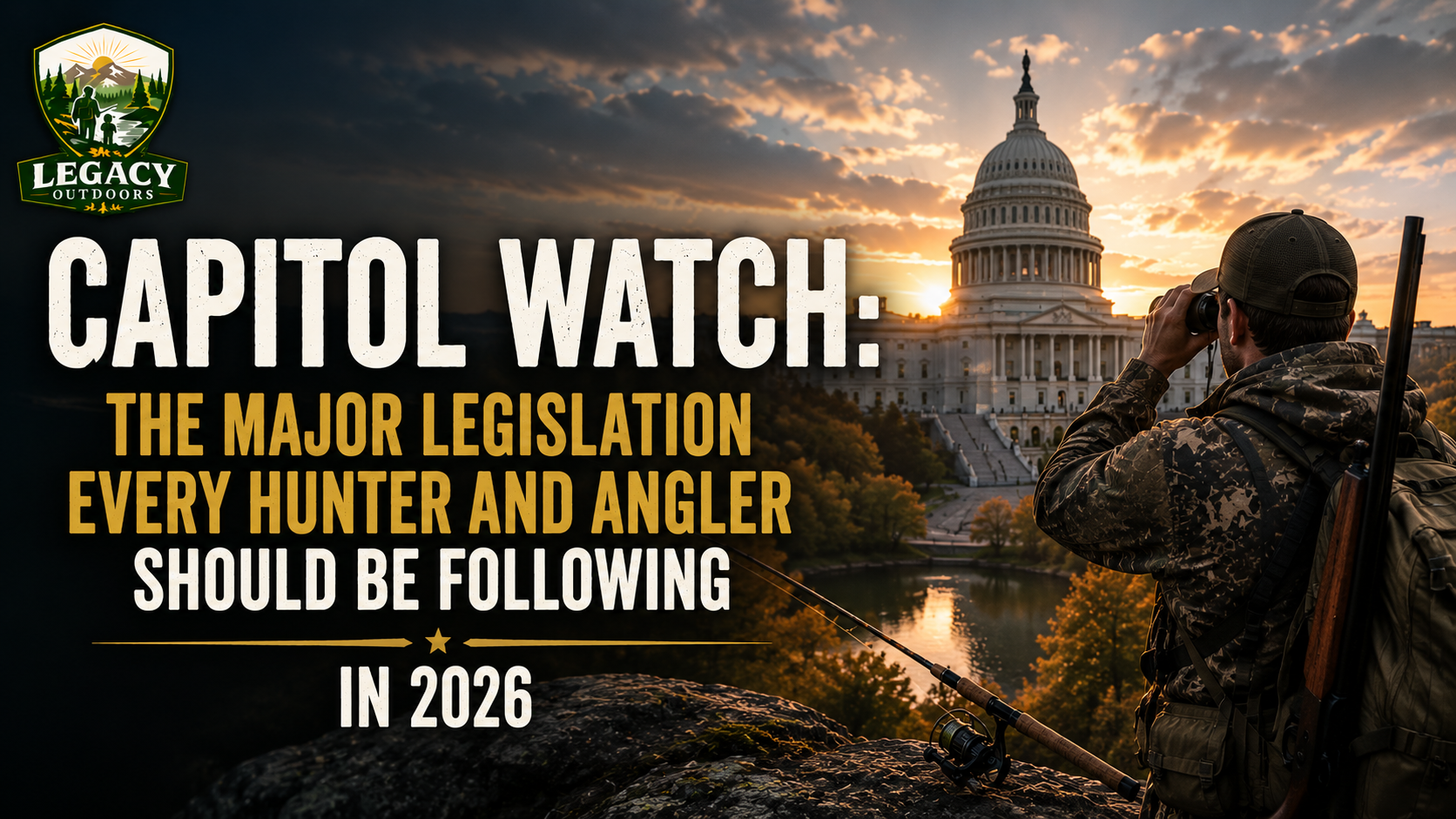
Capitol Watch: The Major Legislation Every Hunter and Angler Should Be Following in 2026
While most sportsmen are focused on summer fishing, preparing food plots, or scouting for fall hunting seasons, significant decisions are being made in Washington that could affect the future of America’s outdoor traditions.
From public land access and conservation funding to ammunition regulations and wildlife habitat programs, several legislative efforts are moving through Congress that deserve the attention of every hunter, angler, and outdoor enthusiast.
Whether you hunt whitetails in Iowa, fish the Gulf Coast, or pursue elk in the Rockies, these proposals have the potential to shape the future of outdoor recreation for years to come.
The 2026 Farm Bill: The Biggest Issue Most Sportsmen Aren’t Watching
If there is one piece of legislation that could have the greatest long-term impact on hunting and fishing, it may not be a hunting bill at all.
It’s the 2026 Farm Bill.
The House Agriculture Committee recently advanced the Farm, Food, and National Security Act of 2026, beginning negotiations that will determine the future of numerous conservation programs tied directly to wildlife habitat. Many of the nation’s most successful habitat initiatives are funded through Farm Bill programs.
For hunters, these programs help create:
Deer habitat
Waterfowl nesting areas
Pheasant and quail cover
Pollinator habitat
Wetland restoration
Public access opportunities
Conservation organizations are currently urging Congress to strengthen the Conservation Reserve Program (CRP), which has long been considered one of the most important habitat programs in America.
Many sportsmen may never realize that some of their favorite hunting grounds exist because of Farm Bill conservation funding.
Protecting Access for Hunters and Anglers Act
One of the most closely watched sportsmen-specific bills is the Protecting Access for Hunters and Anglers Act.
Supporters say the legislation would prevent broad federal restrictions on traditional ammunition and fishing tackle unless specific scientific evidence justifies restrictions in a particular area. The bill has gained significant support among hunting and fishing organizations that argue access and traditional sporting practices should remain protected.
For many sportsmen, the debate centers on balancing conservation goals with maintaining affordable and practical access to hunting and fishing equipment.
Public Lands Access Expansion
In what may be one of the most positive developments for hunters and anglers this year, the Department of the Interior recently announced what it described as the largest proposed expansion of hunting and fishing access in the history of the U.S. Fish and Wildlife Service.
The proposal would open or expand opportunities across numerous federal lands, wildlife refuges, and hatchery properties. Federal officials say the effort is designed to increase public access while supporting local economies and traditional outdoor recreation.
For sportsmen living in states with limited public land access, these changes could create entirely new opportunities.
Modernizing Public Water Access
Another recent victory for anglers involves legislation aimed at improving access to public waters.
The Modernizing Access to Our Public Waters Act was signed into law in late 2025 and is expected to improve public awareness of access opportunities through enhanced mapping and information systems. Conservation groups have praised the measure as a practical step toward helping Americans locate places to hunt and fish.
Access remains one of the biggest barriers facing new hunters and anglers, making efforts like these particularly important.
Wildlife Conservation Funding Remains a Major Debate
One of the most discussed conservation proposals remains the Recovering America’s Wildlife Act (RAWA).
The legislation would provide substantial long-term funding to states and tribes for proactive conservation efforts aimed at preventing species declines before they require federal protection under the Endangered Species Act. Supporters describe it as a once-in-a-generation investment in wildlife conservation.
Advocates argue that early conservation is often more effective and less expensive than waiting until species become endangered.
Many hunting and fishing groups support the concept because healthy wildlife populations ultimately benefit both conservation and outdoor recreation.
Wildlife Crossings and Habitat Connectivity
Another lesser-known issue gaining momentum is wildlife infrastructure.
The House Transportation Committee recently advanced provisions that include wildlife crossings, fish passage improvements, and habitat resilience projects as part of broader transportation legislation. Supporters say these projects can reduce vehicle collisions, improve wildlife movement, and strengthen fish populations.
For rural communities where deer-vehicle collisions are common, these investments could provide both safety and conservation benefits.
State-Level Challenges Sportsmen Are Watching
Not all important developments are occurring in Washington.
One of the most closely watched state-level issues is an Oregon ballot initiative that critics argue could effectively prohibit hunting, fishing, trapping, and numerous other traditional uses of animals if approved by voters. The proposal recently moved closer to qualification for the statewide ballot.
The outcome could have implications far beyond Oregon, as many sportsmen view it as part of a broader national debate about hunting rights and wildlife management.
Why These Bills Matter
Many Americans think hunting and fishing are protected simply because they have always existed.
History shows that outdoor traditions survive only when people remain engaged.
Access programs determine where we can hunt and fish.
Conservation funding influences the quality of wildlife habitat.
Wildlife legislation affects species populations.
Land management policies shape the future of public access.
The decisions being made today will influence the opportunities available to our children and grandchildren tomorrow.
The Future of America’s Outdoor Heritage
For generations, hunters and anglers have served as some of the nation’s strongest conservationists. License fees, excise taxes, habitat programs, and volunteer efforts have helped restore wildlife populations and preserve outdoor opportunities across America.
As Congress debates these issues, sportsmen would be wise to stay informed.
Because while opening day may be months away, some of the most important decisions affecting the future of hunting and fishing are being made right now.
The future of America’s outdoor heritage may depend as much on what happens in legislative chambers as what happens in the woods and on the water.
Free. Delivered to your inbox.