Chapter 1: The Power of a Hunt
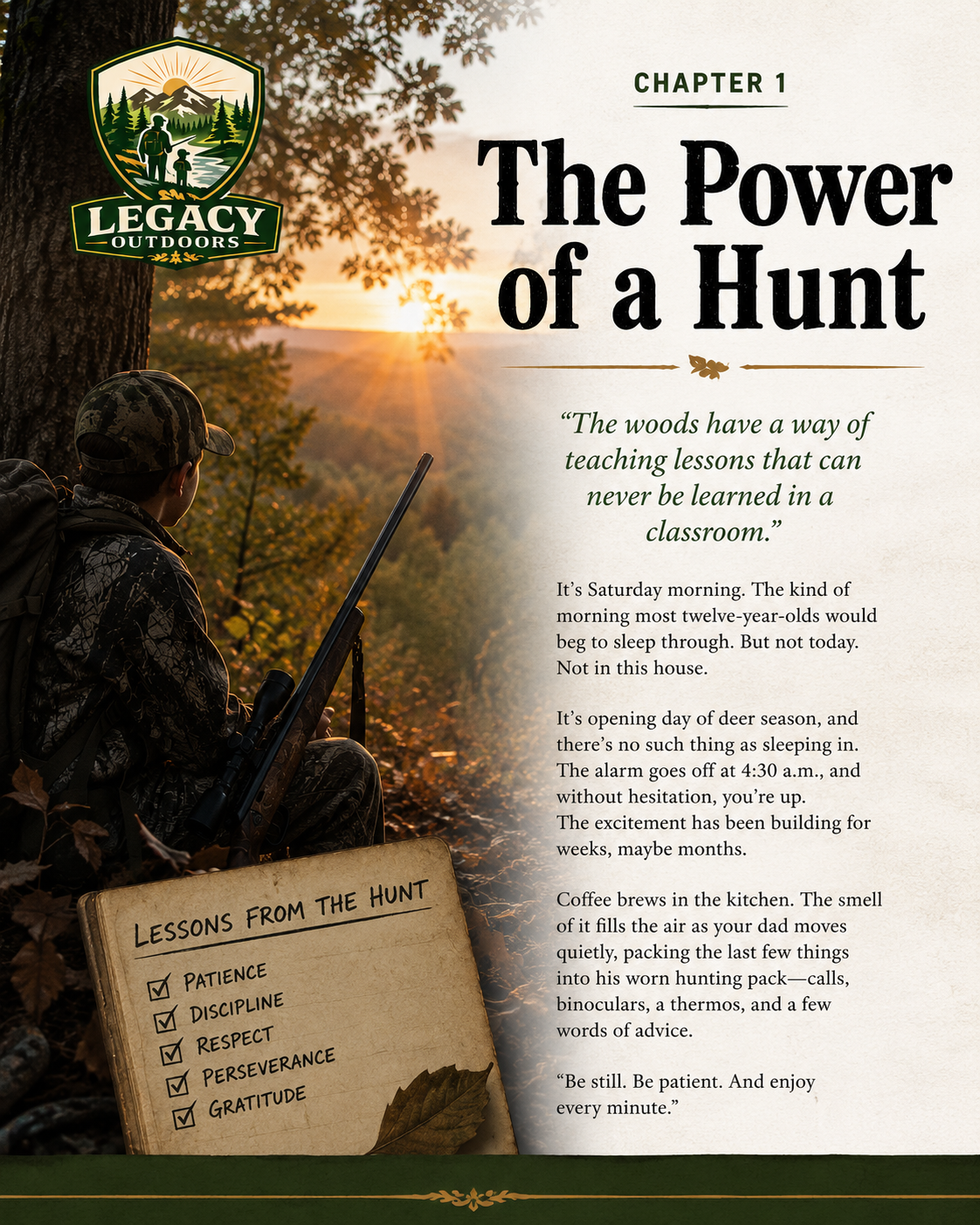
“The woods have a way of teaching lessons that can never be learned in a classroom.”
For most twelve-year-olds, Saturday morning means one thing: sleeping in.
But for those of us raised in hunting families, especially in the backroads of southern North Carolina, Saturdays in the fall meant something entirely different. They meant alarms set before dawn, thermoses filled with coffee for Dad and hot chocolate for the kids, and trucks rumbling down dirt roads toward a waiting forest.
At 4:30 in the morning, the alarm would sound, though I rarely heard it. More often, I remember the soft footsteps outside my bedroom door. Dad would quietly wake me, and despite every instinct telling me to roll over and go back to sleep, I knew there was no negotiation.
It was deer season.
Still half asleep, I’d pull on layer after layer until I looked more like a walking sleeping bag than a hunter. Outside, the late-fall air bit at any exposed skin. Forty-five degrees in North Carolina carries a damp chill that seeps through gloves and jackets alike.
The drive to the woods was mostly silent. Darkness swallowed the road ahead, broken only by the headlights and the occasional pair of glowing eyes reflecting from the edge of the timber. Those quiet moments with my father needed no conversation. The destination said enough.
Once we arrived, flashlights guided every careful step through the forest. Dad navigated trails he had walked for years, reading the woods with the confidence that only experience can provide. Fallen logs, creek crossings, game trails, and familiar trees all served as landmarks long before handheld technology ever existed.
Eventually we climbed into the stand, settled into our seats, and waited.
Sometimes I even drifted back to sleep for a few minutes.
Then, almost without warning, the woods awakened.
The first birds greeted the coming light with cheerful songs. Squirrels scolded from nearby branches as they began their morning routines. A gentle breeze stirred the leaves overhead while the darkness slowly surrendered to ribbons of gold stretching across the forest floor.
It was impossible not to stop and simply watch.
Long before I understood theology or conservation or the responsibilities that come with stewardship, I understood this: I was witnessing something beautiful that I did not create.
The silence of the woods has a remarkable way of clearing the noise from your mind. Sitting there, rifle resting across your lap and sunrise breaking through the pines, gratitude comes naturally. You find yourself thanking God—not just for the opportunity to hunt, but for the privilege of seeing His creation come alive another day.
People who have never hunted often imagine that success is measured only by what is harvested.
Those who return year after year know better.
The true reward is found in the mornings shared with family, in traditions faithfully passed from one generation to the next, in lessons learned through patience and stillness, and in the quiet realization that some of life’s greatest moments happen when no words are spoken at all.
A successful hunt may put venison in the freezer.
But the greatest hunts leave something far more lasting in the heart.
And for a young boy following his father into the woods before sunrise, those mornings became the foundation for a lifetime of faith, family, and gratitude—a reminder that the greatest trophies are often the memories we carry home.
Free. Delivered to your inbox.