Dove Season 2026: Opening Day, Hunting & Tradition
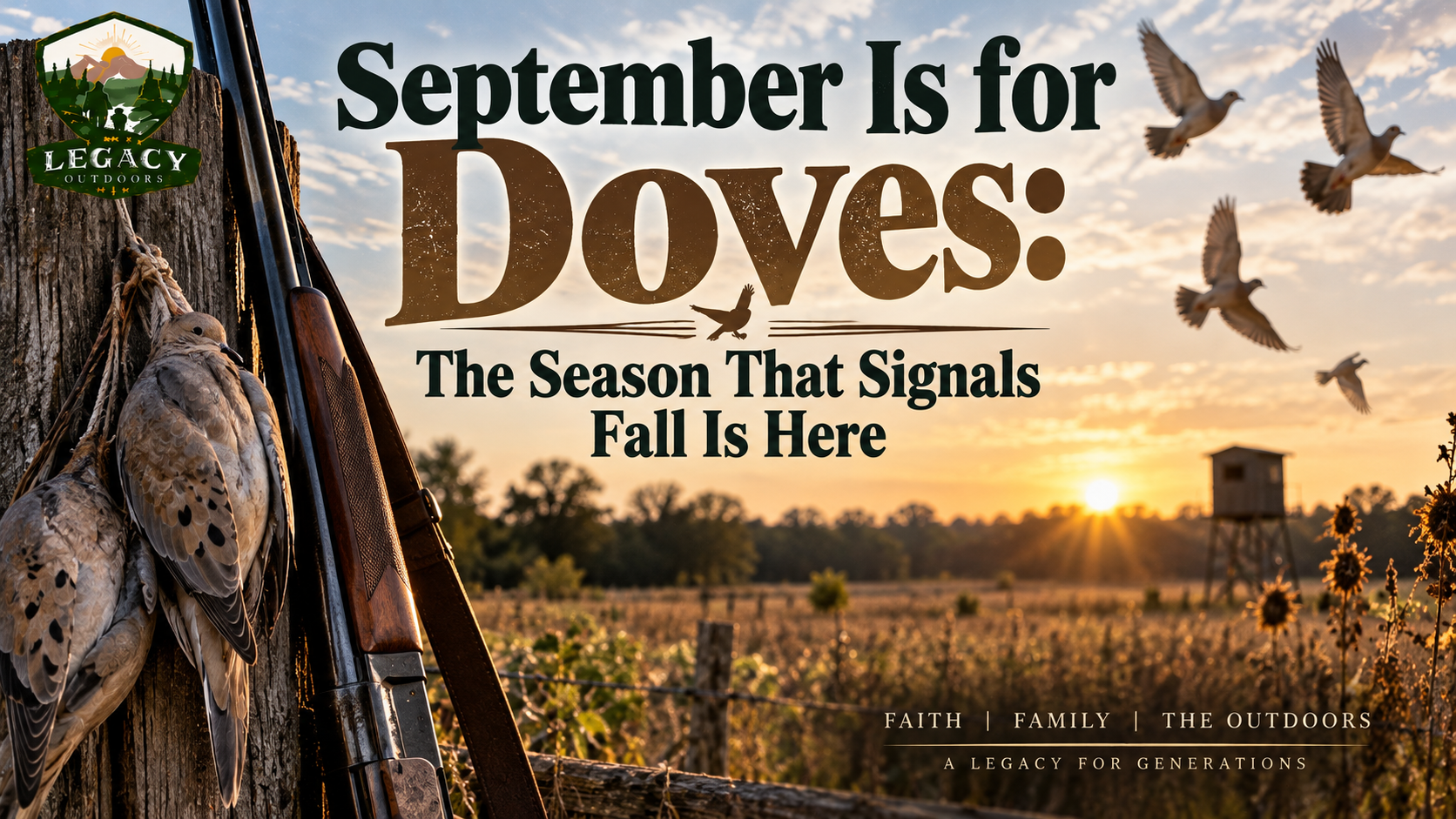
Opening Day, Family Traditions and the Return of One of America’s Most Beloved Small-Game Hunts
There is a sound that tells a sportsman summer is finally giving way to fall.
The crack of a shotgun over a freshly cut field.
Across much of the country, September has brought the return of mourning dove hunting—and for generations of hunters, it has marked the unofficial beginning of another season in the outdoors.
From sitting in a dusty field with an old shotgun to introducing a child to hunting for the first time, dove season is about much more than filling a game bag.
It’s about opening-day traditions, family, food and getting back outside.
Dove Season Is Already Underway
For many hunters, the 2026-27 season is already here.
Texas opened its dove season September 1, while Georgia and North Carolina opened September 5.
Georgia’s first segment runs through October 11, with additional seasons later in November, December and January. North Carolina’s first segment runs September 5 through October 10, followed by additional segments later in the season.
Florida sportsmen, however, will have to wait a little longer. Florida’s statewide mourning and white-winged dove season begins September 26, followed by additional segments later in the year.
That means the Southeast is quickly moving into one of the most anticipated times of the sporting calendar.
The Perfect Introduction to Hunting
Dove hunting has long been considered one of the most accessible ways to introduce someone to hunting.
Georgia wildlife biologist Kara Nitschke specifically describes dove season as a particularly good opportunity for beginners because of its relatively low-pressure pace, exciting action and social atmosphere.
And that’s exactly what makes a dove field special.
You don’t necessarily need a weeklong backcountry expedition.
You don’t need an elaborate camp.
You don’t need to spend thousands of dollars.
Sometimes you need a shotgun, a legal place to hunt, some patience and a willing mentor.
For a young hunter, that first afternoon can become a lifelong memory.
It’s About the People Sitting Beside You
Ask an experienced sportsman about his favorite dove hunt and there’s a good chance he won’t immediately tell you how many birds he harvested.
He’ll tell you who was there.
His father.
His grandfather.
His brothers.
His friends.
Maybe his son or daughter.
That’s the magic of dove hunting.
Hunters sit together.
They talk.
They laugh.
They watch the sky.
And between flights of birds, stories inevitably begin.
The hunt becomes a gathering.
And the gathering becomes tradition.
A Field Full of Memories
There is something uniquely American about a September dove field.
The heat of the late summer afternoon.
The smell of freshly cut crops.
A thermos or cooler nearby.
Shotguns leaning within reach.
Birds appearing suddenly against the sky.
And then that familiar sound:
Boom.
For some families, these scenes have been repeated for decades.
The location may change.
The shotgun may change.
The young hunter eventually becomes the experienced hunter.
But the tradition remains.
Don’t Forget the Rules
Dove hunting is regulated under migratory bird hunting laws, meaning hunters need to know the regulations for the state and specific property where they intend to hunt.
Dates, shooting hours, licensing requirements, bag limits and other restrictions can vary.
For example, Georgia’s 2026-27 dove season carries a 15-bird daily bag limit, with shooting hours from one-half hour before sunrise until sunset.
North Carolina likewise lists a 15-bird daily bag limit for mourning and white-winged doves.
Florida’s 2026-27 regulations also establish a 15-bird daily limit.
Always check your state’s current regulations before heading into the field. Wildlife management areas and other public lands can have additional rules.
Public Fields Can Open the Door
You don’t necessarily need to own farmland to participate.
Georgia, for example, points hunters toward public dove fields on Wildlife Management Areas and Voluntary Public Access properties. These fields are managed specifically to provide habitat and hunting opportunities.
That is an important part of the future of hunting.
Public access gives new sportsmen an opportunity to experience hunting without needing to own hundreds of acres.
And every new hunter who learns to appreciate wildlife, conservation and ethical hunting becomes another potential steward of America’s outdoor heritage.
The Conservation Story Behind the Hunt
It’s easy to look at dove hunting simply as a harvest.
But migratory bird hunting exists within a much larger conservation system.
Hunters contribute financially to wildlife conservation through licenses and federal excise taxes on firearms and ammunition.
They also contribute information.
Georgia is encouraging hunters using public dove fields to participate in its 2026 dove harvest survey, while hunters who find bands on harvested doves can report them through the federal band-reporting system.
That little metal band can turn a successful hunt into useful information for wildlife researchers.
The sportsman isn’t simply taking from the resource. He’s participating in its management.
Respect the Field
Good dove hunting starts long before the first shot.
Know the property.
Know where other hunters are positioned.
Identify your target.
Know what lies beyond it.
Never shoot at birds sitting on power lines.
Georgia DNR specifically warns hunters that power lines can be attractive roosting locations for doves, but shooting toward them can cause serious damage and create an unnecessary hazard.
And remember that ethical hunting isn’t measured by how many shells you fire.
It’s measured by how responsibly you conduct yourself.
The First Hunt With Your Kids
If you’ve got a young person in your life who has been asking about hunting, dove season may be the perfect opportunity.
Don’t make the first experience all about the harvest.
Make it about the experience.
Teach them how to safely handle the firearm.
Teach them how to identify the target.
Teach them how to sit patiently.
Teach them to respect the land.
Teach them that a missed shot isn’t a failure.
And when the birds aren’t flying?
Talk.
That’s when some of the best conversations happen.
Then Bring the Harvest Home
One of the great traditions of dove hunting is that the experience doesn’t necessarily end when you leave the field.
It can continue around the dinner table.
A successful hunt can become part of a family meal, with younger generations learning that wild game isn’t simply something to pursue for recreation.
It can be food.
And when that food comes from an animal harvested responsibly, prepared carefully and shared with family and friends, the experience comes full circle.
Field to table.
That’s an outdoor tradition worth preserving.
Texas Is Already Looking Toward the Next Season
Texas provides a particularly good example of how quickly the fall hunting calendar begins moving.
The state’s dove opener arrived September 1, officially kicking off the 2026-27 hunting season. Texas also made several hunting-regulation changes this year, making it especially important for sportsmen to review current regulations rather than relying on what they remember from previous seasons.
And September doesn’t stop with doves.
Early teal season in Texas begins September 19 and runs through September 27, giving waterfowl hunters another opportunity to get into the field.
Across the country, the outdoor calendar is beginning to accelerate.
Doves.
Teal.
Archery.
Then deer.
Then waterfowl.
Before long, the woods and wetlands will look very different.
Fall Is Coming
That’s perhaps what makes dove season so special.
It sits right on the edge of two seasons.
Summer isn’t quite gone.
Fall isn’t quite here.
But the sportsman knows what’s coming.
Cooler mornings.
Changing leaves.
Deer movement.
Duck migrations.
Campfires.
And countless weekends outside.
Dove season is the opening chapter.
Don’t Just Hunt the Bird
This year, when you sit down in that field, don’t be so focused on the next bird that you miss everything else.
Look around.
Listen to the conversation.
Watch the sunset.
Pay attention to the kid sitting beside you.
Thank the landowner.
Respect the wildlife.
And be grateful that you have another opportunity to participate in something generations of Americans have enjoyed before us.
Because eventually, the birds will stop flying.
The season will close.
The shotgun will go back into the safe.
And another September will become a memory.
But the person you brought with you may remember that afternoon for the rest of their life.
That’s the real harvest of dove season.
Not simply what you bring home.
It’s what you pass on.
Legacy Outdoors
Dove hunting represents something bigger than another entry on the hunting calendar.
It represents access, conservation, family and generational tradition.
As the 2026-27 seasons begin across the country, take someone with you.
Teach them.
Keep them safe.
Respect the resource.
And make a memory worth passing down.
Because the greatest trophies aren’t always the ones you bring home. Sometimes they’re the traditions you leave behind.
Free. Delivered to your inbox.