
Florida Citrus Heritage: More Than the Sunshine State
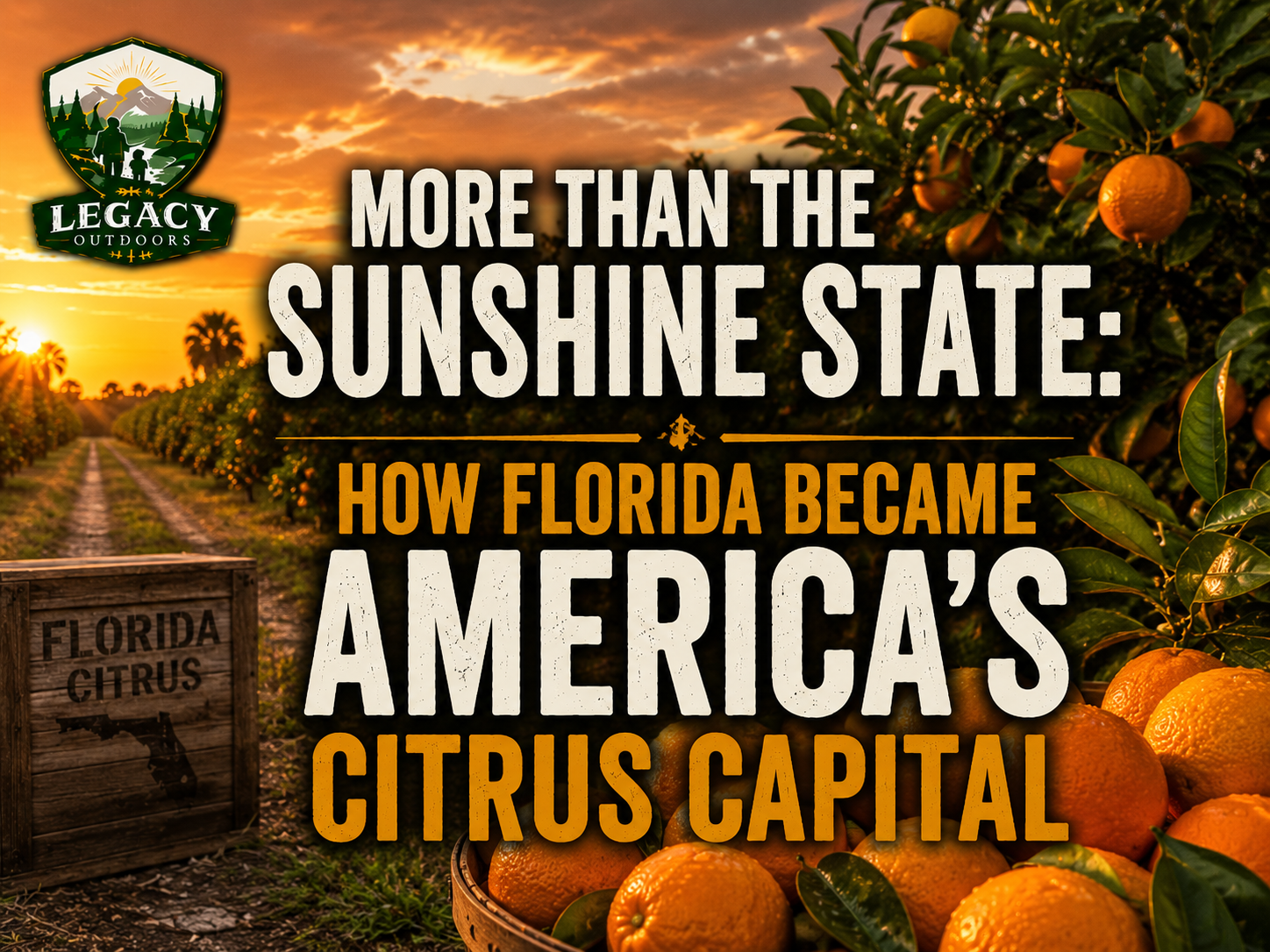
Mention Florida, and most people immediately picture white-sand beaches, world-famous theme parks, offshore fishing, and endless sunshine.
But long before millions of tourists arrived each year, another symbol helped define the Sunshine State.
The orange.
For generations, Florida’s citrus groves have been as iconic as its palm trees. Fresh oranges, grapefruit, lemons, and tangerines have not only shaped the state’s economy but have also become part of America’s agricultural identity.
Although Florida’s citrus industry faces significant challenges today, its legacy remains one of the greatest agricultural success stories in American history.
A Fruit That Changed a State
Ironically, oranges aren’t native to Florida.
Citrus trees originated in Asia before spreading westward through Europe. Spanish explorers introduced citrus to Florida during the 1500s, planting orange trees near settlements and missions. Over time, the state’s warm climate, abundant sunshine, and sandy soils proved nearly perfect for growing citrus.
By the late 1800s and throughout much of the 20th century, Florida had become synonymous with oranges.
Entire communities were built around citrus production.
Packing houses.
Juice plants.
Family groves.
Seasonal harvests.
Thousands of Floridians made their living from the fruit that would eventually become one of the state’s defining industries.
The Orange Juice Capital of America
For decades, Florida dominated American orange production.
At its peak, the state supplied the overwhelming majority of the nation’s oranges, with most of the crop destined for orange juice production.
Even today, the vast majority of Florida oranges are processed into juice rather than sold fresh, making orange juice one of the state’s signature agricultural products.
For many Americans, breakfast wasn’t complete without a glass of Florida orange juice.
That simple tradition connected families across the country to hardworking growers hundreds of miles away.
More Than Just Oranges
While oranges receive most of the attention, Florida’s citrus industry produces far more than one fruit.
Growers also raise:
Grapefruit
Tangerines
Mandarins
Tangelos
Lemons
Limes
Specialty citrus varieties
Driving through central and southern Florida during harvest season reveals endless rows of citrus trees stretching across the landscape, their branches heavy with brightly colored fruit.
The fragrance alone is unforgettable.
The Challenges Facing Florida’s Groves
Like many agricultural industries, Florida citrus has faced tremendous obstacles over the past two decades.
The most significant has been citrus greening disease (Huanglongbing or HLB), a bacterial disease first detected in Florida in 2005. Spread by the tiny Asian citrus psyllid, the disease weakens trees, reduces fruit quality, causes premature fruit drop, and eventually kills infected trees.
The industry has also endured:
Multiple destructive hurricanes.
Periodic freezes.
Development pressures.
Rising production costs.
Labor shortages.
These combined challenges have dramatically reduced production, with Florida’s orange harvest declining by roughly 90 percent since the early 2000s.
Yet despite these hardships, thousands of growers continue fighting to preserve an industry that has defined the state for generations.
The Heart of Rural Florida
Many visitors never leave Florida’s beaches.
But inland Florida tells another story.
Communities throughout central and southern Florida continue to revolve around agriculture.
Alongside cattle ranches, sod farms, vegetable fields, and sugarcane operations, citrus remains an important part of rural life and culture.
During harvest season, trucks loaded with fruit travel country roads before delivering their loads to processing plants that transform fresh oranges into the juice found on breakfast tables across America.
Stewardship of the Land
Growing citrus is far more than planting a tree and waiting for fruit.
Successful growers spend years caring for their groves.
They monitor irrigation.
Protect against pests and disease.
Prune trees.
Watch the weather.
And pray that hurricanes stay offshore.
Like farmers across America, citrus growers understand that every harvest ultimately depends upon God’s provision.
Sunshine.
Rain.
Healthy soil.
And seasons that cooperate.
Supporting American Agriculture
As consumers become more interested in knowing where their food comes from, many families are intentionally choosing to support American farmers whenever possible.
Buying Florida citrus products helps sustain family farms, rural communities, and an agricultural tradition that has been passed down through generations.
Every orange purchased represents countless hours of labor by growers who continue working despite increasingly difficult conditions.
More Than a Vacation Destination
Florida certainly deserves its reputation as the Sunshine State.
Its beaches attract visitors from around the world.
Its waters provide incredible fishing opportunities.
Its state parks showcase remarkable wildlife.
But beyond the coastline lies another treasure.
An agricultural heritage rooted in faith, hard work, and stewardship.
The orange groves that helped build modern Florida are more than rows of fruit trees.
They are living reminders that the land, when cared for wisely, continues to provide.
As Christians, we’re reminded that every harvest—whether from a garden, a cattle ranch, a fishing boat, or a citrus grove—is ultimately a gift from God.
The next time you pour a glass of orange juice or peel a fresh Florida orange, take a moment to appreciate the generations of farmers who have dedicated their lives to feeding America.
Because Florida isn’t just the Sunshine State.
It’s one of America’s great agricultural states—and its citrus heritage remains a legacy worth celebrating.
Free. Delivered to your inbox.