From Garden to Table: Natural Ways to Feed Your Family
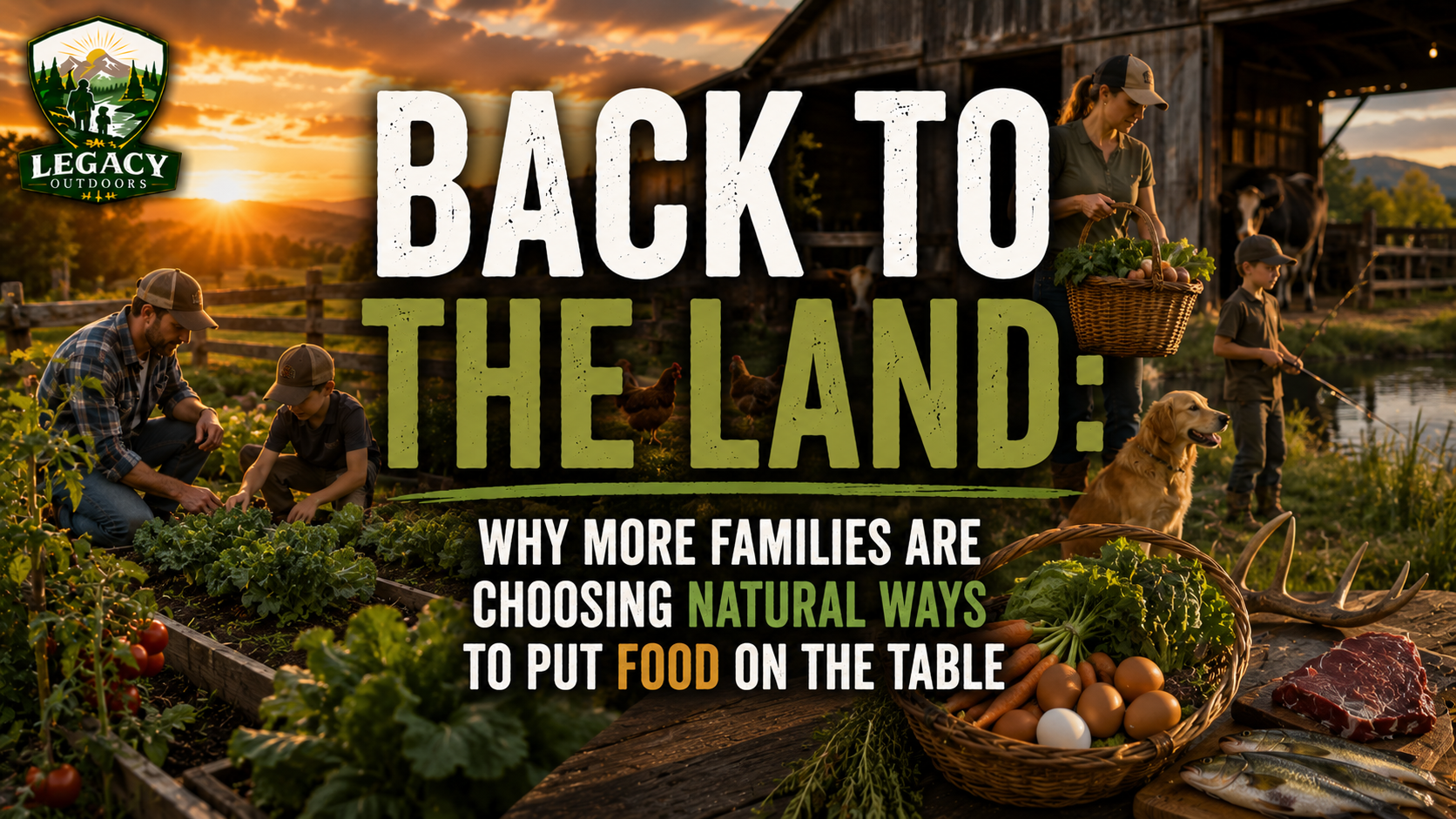
Not every family owns a hundred acres.
Not everyone hunts.
Not everyone fishes.
But every family eats.
In recent years, Americans have become increasingly interested in knowing where their food comes from. Rising grocery prices, concerns about food quality, and a renewed appreciation for local agriculture have inspired many families to return to practices that were once simply part of everyday life.
Some have planted backyard gardens.
Others have filled freezers with venison, wild turkey, or fresh-caught fish.
Many have discovered the value of buying beef, pork, chicken, eggs, fruits, and vegetables directly from local farmers and ranchers.
The goal isn’t necessarily complete self-sufficiency.
It’s becoming more connected to the food that nourishes our families.
A Lifestyle Our Grandparents Understood
There was a time when “farm to table” wasn’t a marketing phrase.
It was simply how people lived.
Families raised gardens behind their homes.
Neighbors traded vegetables during harvest season.
Hunters provided wild game.
Fishermen filled coolers from nearby rivers and lakes.
Local ranchers supplied beef and pork raised just down the road.
People knew who grew their food because they often knew the farmer personally.
That connection created trust, appreciation, and a deeper understanding of the hard work required to feed a family.
The Backyard Garden Revival
One of the easiest ways to become more connected to your food is by planting a garden.
You don’t need dozens of acres.
Many successful gardens begin with just a few raised beds or containers on a patio.
Popular choices include:
Tomatoes
Peppers
Cucumbers
Green beans
Squash
Lettuce
Herbs
Potatoes
Gardening teaches patience, responsibility, and gratitude.
Children who help plant seeds often develop a greater appreciation for the food on their plates.
Watching something grow from a tiny seed into a meal shared around the dinner table is one of life’s simplest and most satisfying rewards.
Hunting: Nature’s Freezer
For generations, hunting has helped feed American families.
Ethical hunters understand that the harvest represents much more than a trophy.
Venison, elk, wild turkey, waterfowl, wild hog, and other game provide lean, nutritious protein that can feed a household for months.
Every successful hunt also carries responsibility.
Respect for wildlife.
Responsible wildlife management.
Proper meat care.
Using as much of the animal as possible.
These values have long been part of America’s hunting heritage.
Fishing: Fresh Food from God’s Waters
Fishing remains one of the most accessible ways to provide healthy meals.
Whether catching trout in mountain streams, bass on local lakes, crappie from farm ponds, or redfish along the coast, anglers enjoy the satisfaction of preparing fresh fish for family and friends.
Many of the best meals are also the simplest.
Fresh fish.
A little seasoning.
A hot grill.
Good company.
Sometimes that’s all you need.
Supporting Local Farmers and Ranchers
Not everyone hunts or fishes.
That doesn’t mean you can’t support local agriculture.
Across America, family farms and ranches continue producing high-quality beef, pork, poultry, dairy products, honey, and fresh produce.
Buying locally often means:
Supporting small businesses.
Keeping money in your community.
Building relationships with producers.
Learning how your food is raised.
Encouraging responsible land stewardship.
Many communities also have farmers markets where customers can meet the people growing their food.
Others purchase meat directly from nearby ranches or companies that focus on sourcing from American producers, such as Good Ranchers.
Every purchase is an opportunity to support the people who work tirelessly to feed our nation.
More Than Saving Money
For most families, this movement isn’t only about economics.
It’s about values.
Children learn that food doesn’t magically appear on grocery store shelves.
They learn that raising livestock requires dedication.
That gardens require work.
That successful fishing trips require patience.
That hunting requires discipline and respect.
These lessons build character while strengthening family relationships.
Stewardship of God’s Creation
From the very beginning of Scripture, God entrusted mankind with the responsibility of caring for His creation.
Gardening reminds us that growth ultimately comes from the Lord.
Farming teaches dependence upon seasons, rain, and the provision of God.
Hunting and fishing remind us to harvest responsibly and never take creation for granted.
Whether tending a garden, raising cattle, harvesting a deer, or catching fish for dinner, Christians have an opportunity to practice stewardship while giving thanks for God’s abundant provision.
Building Resilient Families
One of the greatest benefits of becoming more connected to your food is confidence.
Knowing how to grow vegetables.
Learning to preserve food.
Understanding where meat comes from.
Cooking from scratch.
These skills have served families for generations and continue to hold tremendous value today.
Even small steps—planting a tomato plant, buying beef from a nearby ranch, or taking your children fishing—help reconnect us with traditions that shaped America.
The Legacy We Leave
At Legacy Outdoors, we often say that outdoor traditions are about much more than recreation.
They’re about passing something meaningful to the next generation.
Teaching a child to garden.
Sharing a fishing trip.
Introducing a young hunter to ethical harvest.
Supporting the family farm down the road.
These experiences create memories while helping preserve skills that have sustained families for centuries.
Because in the end, becoming more connected to our food isn’t about turning back the clock.
It’s about moving forward with greater appreciation for God’s creation, the hardworking men and women who produce our food, and the timeless values that continue to strengthen families one meal at a time.
Free. Delivered to your inbox.