From the Farm to the Governor’s Mansion? How Zach Lahn’s Agricultural Background Could Benefit Iowa’s Farmers and Sportsmen
As Iowa’s 2026 gubernatorial race unfolds, one candidate has drawn attention for taking a different path into politics.
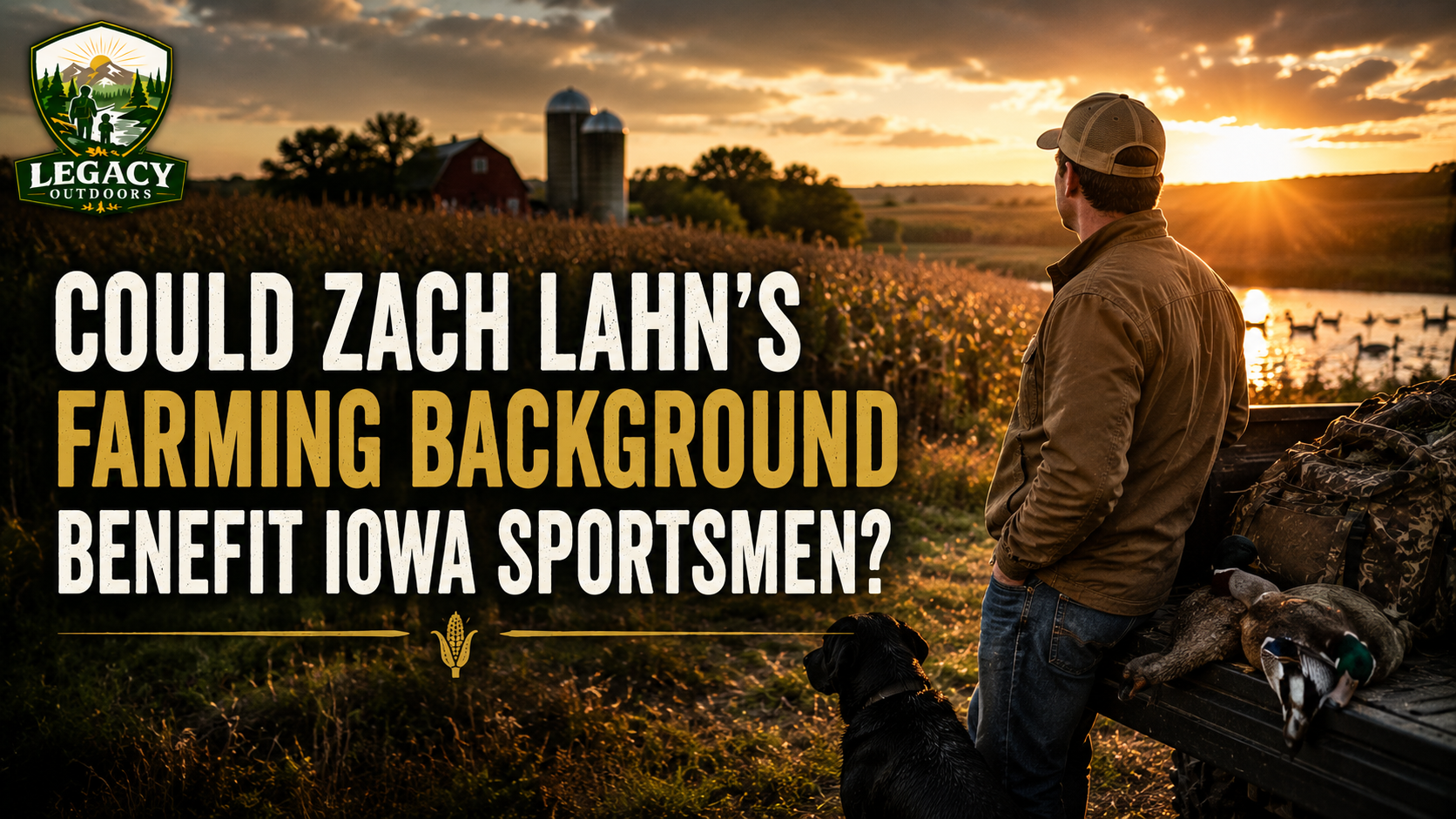
Unlike many career politicians, Republican candidate Zach Lahn entered the race with deep roots in Iowa agriculture. Public reports describe Lahn as a farmer from Belle Plaine, Iowa, whose campaign has focused heavily on issues affecting rural communities, agriculture, and the future of Iowa’s farming economy.
For sportsmen, farmers, and rural families, the possibility of having a governor with firsthand agricultural experience raises an important question:
How might a farming background influence policies affecting hunting, conservation, and rural Iowa?
Understanding Life Beyond the City Limits
One of the most common concerns among rural voters is whether elected leaders truly understand the challenges facing agricultural communities.
Farmers deal with fluctuating commodity prices, rising equipment costs, weather risks, labor shortages, land stewardship, and increasingly complex regulations. These challenges are difficult to fully appreciate without firsthand experience in the industry.
A governor who has worked in agriculture often brings a practical understanding of how policy decisions affect farm operations, landowners, and rural communities. That perspective can influence everything from tax policy to conservation programs and infrastructure investments.
Supporting Iowa’s Agricultural Economy
Agriculture remains the backbone of Iowa’s economy.
The state consistently ranks among the nation’s leaders in corn, soybean, pork, and egg production. Rural communities depend heavily on the success of local farms, agribusinesses, equipment dealers, grain elevators, and related industries.
Candidates with agricultural backgrounds often emphasize:
Protecting family farms
Expanding market opportunities
Reducing unnecessary regulatory burdens
Strengthening rural infrastructure
Supporting agricultural innovation
Preserving farmland for future generations
These priorities can have significant impacts not only on farmers but also on the broader rural economy.
Why Hunters Should Pay Attention
At first glance, farming and hunting may appear to be separate issues.
In reality, they are closely connected.
Much of Iowa’s wildlife habitat exists on or near agricultural land. Responsible land management practices often benefit both farming operations and wildlife populations.
Healthy habitat supports:
Whitetail deer
Pheasants
Wild turkey
Waterfowl
Small game species
Pollinators and other beneficial wildlife
When conservation programs encourage habitat restoration, buffer strips, wetlands, and responsible land stewardship, both sportsmen and farmers often benefit.
A governor who understands the relationship between agriculture and conservation may be more inclined to pursue policies that balance production with wildlife management.
Conservation Through Stewardship
Many rural landowners view themselves as stewards of the land rather than merely owners.
That philosophy mirrors the values held by many hunters and anglers who recognize that conservation is essential to preserving outdoor traditions.
Iowa’s future hunting opportunities depend largely on:
Habitat conservation
Water quality improvements
Access programs
Responsible wildlife management
Support for private land conservation efforts
Agricultural leaders often play a critical role in determining how these priorities are addressed at the state level.
Protecting Rural Heritage
Beyond economics and wildlife management lies something deeper: heritage.
Across Iowa, families continue traditions that stretch back generations. Farming operations pass from parent to child. Hunting camps welcome new generations of sportsmen. County fairs, conservation projects, and local outdoor traditions remain central to community life.
Many rural voters see these traditions as worth protecting.
Candidates with agricultural roots often speak about preserving the values and way of life that have helped define Iowa for generations.
What Sportsmen Will Be Watching
As the campaign continues, Iowa hunters, anglers, and outdoor enthusiasts will likely pay close attention to issues such as:
Public access programs
Wildlife conservation funding
Water quality initiatives
Habitat restoration projects
Rural economic development
Support for private landowners
Protection of hunting and fishing traditions
Regardless of political affiliation, these issues directly affect the future of Iowa’s outdoor heritage.
The Bigger Picture
Ultimately, elections are about more than resumes.
Voters will decide whether a candidate’s vision aligns with their own hopes for the state’s future.
For many farmers and sportsmen, however, the idea of a governor who understands agriculture firsthand is appealing. A leader with roots in farming may bring unique insight into the challenges facing rural communities and the opportunities available to strengthen Iowa’s agricultural and outdoor traditions.
Whether discussing corn fields, conservation programs, pheasant habitat, or the next generation of family farms, one reality remains clear:
The future of Iowa’s hunting heritage and agricultural economy will continue to be closely connected.
And many voters believe that understanding begins in the fields.
Free. Delivered to your inbox.