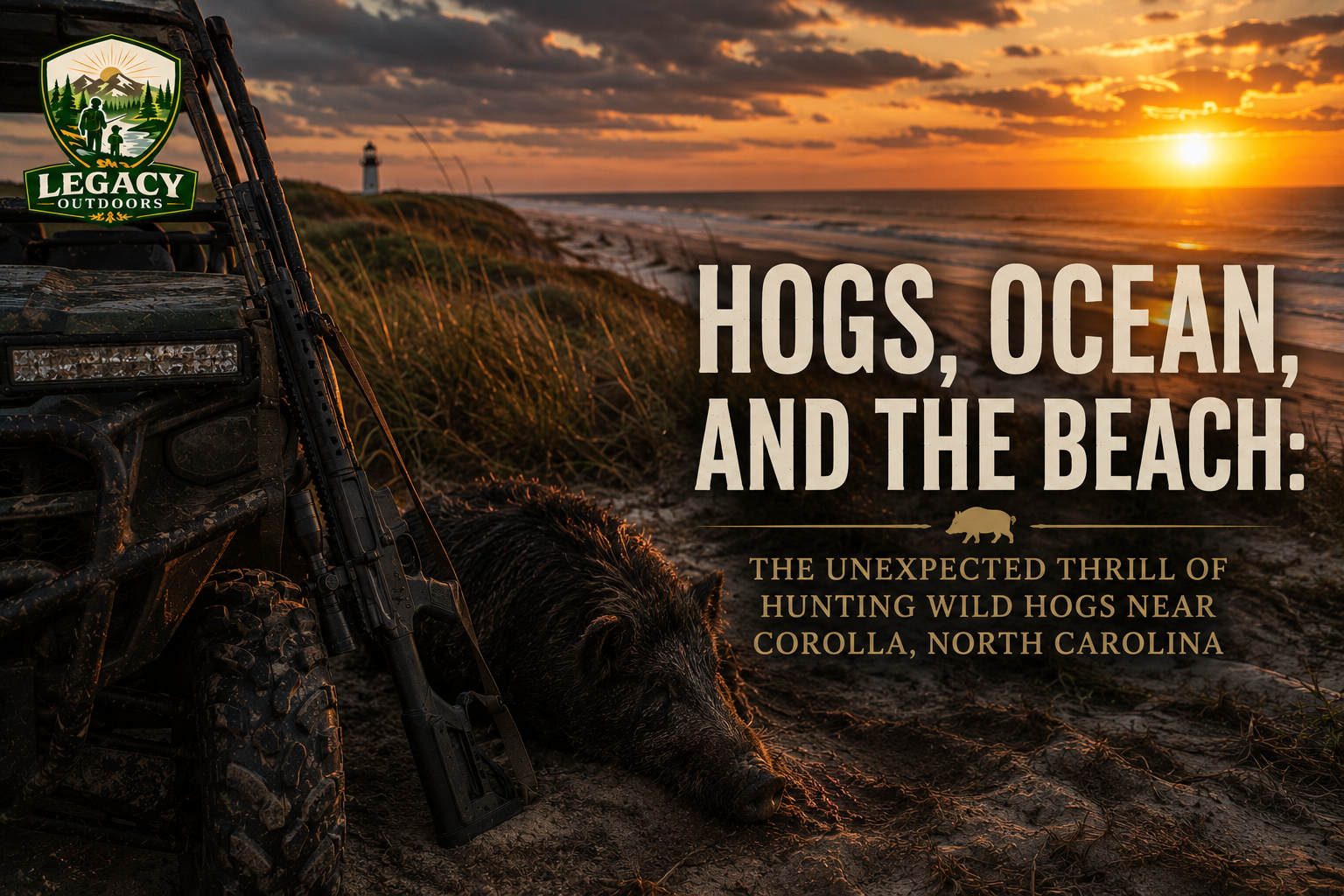
Hogs, Ocean, and the Beach: The Unexpected Thrill of Hunting Wild Hogs Near Corolla, North Carolina
When most outdoorsmen think of North Carolina’s Outer Banks, they picture surf fishing at sunrise, the wild Spanish mustangs of Corolla, or charter boats chasing tuna beyond Oregon Inlet.
Wild hog hunting?
Surprisingly, yes.
Just a short drive inland from the beaches and maritime forests of Currituck County lies habitat that supports feral swine—an invasive species that has spread across portions of North Carolina. It’s one of the few places where a sportsman can spend the morning watching the Atlantic surf roll in and, with proper access and planning, pursue wild hogs later the same day.
It is a combination of beach, backcountry, and adventure that is uniquely North Carolina.
An Invasive Species With a Big Impact
Unlike native game animals, feral hogs are not part of North Carolina’s natural ecosystem. They damage crops, uproot wetlands, destroy wildlife habitat, compete with native species for food, and can spread diseases to livestock and wildlife.
Because of these impacts, wildlife managers encourage responsible control efforts where hog populations exist.
For hunters, pursuing feral swine can be both an exciting challenge and a meaningful contribution to conservation.
Hunting Near Corolla and Currituck County
The communities surrounding Corolla are better known for waterfowl, deer, and fishing than for hog hunting, but pockets of feral swine have been documented in northeastern North Carolina.
Much of the land in and around Corolla is privately owned or otherwise protected, so securing legal access is one of the most important steps before planning a hunt. Hunters should never assume that open-looking land is open to hunting.
Always obtain permission from the landowner or use properties where hunting is expressly authorized.
No Closed Season on Private Lands
One reason hog hunting has grown in popularity is that North Carolina classifies feral swine differently from traditional game species.
Under current regulations:
There is no closed season for hunting feral swine on private lands.
There is no bag limit on feral swine.
Hunters generally must possess a valid North Carolina hunting license, unless they qualify for a statutory exemption.
Night hunting and certain methods may be permitted under state rules, but additional restrictions apply depending on where and how you hunt.
Regulations on public game lands differ and may require additional permits or impose seasonal limitations.
Because regulations can change, always review the latest guidance from the North Carolina Wildlife Resources Commission before your trip.
Safety in Thick Coastal Cover
Hogs are intelligent and resilient animals that often inhabit dense brush and swamp edges.
Successful hunters prioritize safety by:
Positively identifying their target and what lies beyond it.
Maintaining clear communication with hunting partners.
Wearing appropriate hunter orange when required by law or when hunting in areas where other seasons are open.
Respecting property boundaries and neighboring homes.
Preparing for hot, humid coastal conditions by carrying water and navigation equipment.
As with any hunt, patience and preparation often matter more than distance traveled.
From the Beach to the Backwoods
One of the joys of visiting Corolla is experiencing its incredible diversity.
You can spend the early morning surf fishing for bluefish or red drum, explore maritime forests in the afternoon, and end the day watching the sun set over Currituck Sound. For sportsmen with access to appropriate hunting property, adding a hog hunt to that itinerary creates an unforgettable outdoor experience.
It is a reminder that the Outer Banks offer much more than sand and surf—they are home to a surprisingly rich sporting heritage.
Stewardship Matters
Ethical hunters understand that pursuing feral hogs is about more than recreation.
Removing invasive hogs can reduce habitat damage and help protect native wildlife and agricultural lands. Responsible hunting, respect for private property, and adherence to state regulations all play a role in preserving North Carolina’s natural resources.
Whether your day begins with waves crashing on the beach or ends in a quiet stand overlooking coastal timber, the goal remains the same: to enjoy God’s creation while acting as faithful stewards of the land entrusted to us.
Before You Go: Essential Resources
Before planning a hog hunt in or around Corolla, take time to review the official regulations and licensing requirements:
North Carolina Hunting Licenses: North Carolina Wildlife Resources Commission Licensing Portal
Official Feral Swine Regulations: NC Wildlife – Feral Swine Information
Feral Swine Trapping Permits and Rules: NC Wildlife – Feral Swine Trapping Information
The regulations are updated periodically, so verifying the latest requirements before entering the field is one of the most important steps any responsible hunter can take.
Free. Delivered to your inbox.