The Beauty That Still Roams: The Wild Spanish Mustangs of Corolla
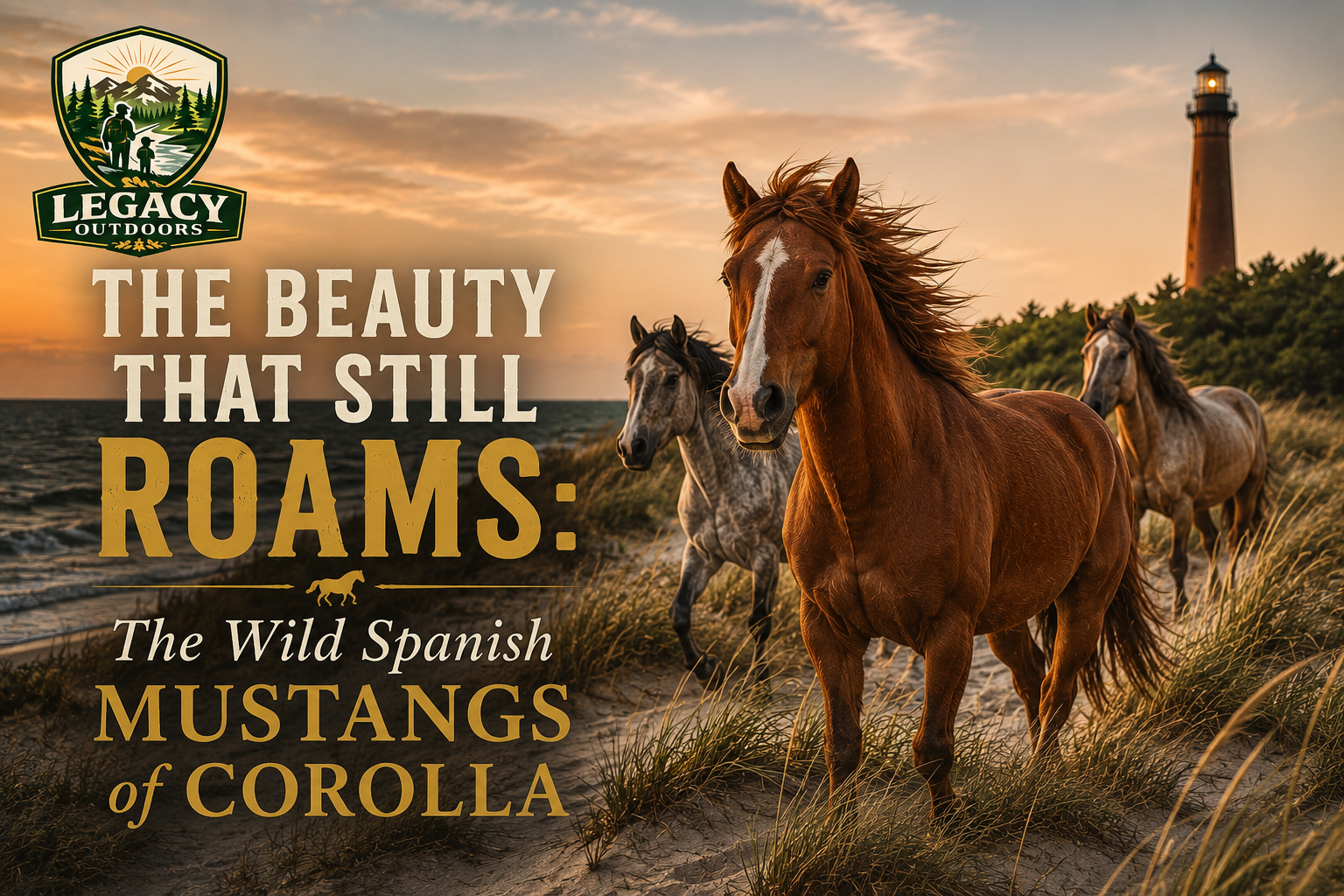
There are few sights in America that stop an outdoorsman in his tracks quite like seeing a wild horse emerge from the dunes.
The morning sun catches its mane as it walks along the beach, hooves pressing into the same sand that has carried storms, shipwrecks, fishermen, and explorers for centuries. There are no fences, no saddles, and no crowds directing its path—only the wind, the surf, and the quiet freedom of the Outer Banks.
In Corolla, North Carolina, that scene is still a reality.
The wild Spanish mustangs that roam these northern beaches are more than a tourist attraction. They are living pieces of American history and enduring reminders of the beauty and resilience woven into God’s creation.
A Legacy Carried Across the Sea
Historians believe the ancestors of Corolla’s wild horses arrived on the Atlantic coast with Spanish explorers as early as the 16th century. Some may have escaped from expeditions, while others could have survived shipwrecks or been abandoned as settlements shifted over time.
Whatever their exact journey, these hardy horses adapted to one of the harshest coastal environments in the country. They learned to survive on sparse vegetation, tolerate salt-laden winds, and navigate shifting dunes that change with every season.
Centuries later, their descendants continue to roam free.
Life Among the Dunes
Unlike domesticated horses raised in barns and pastures, the Corolla mustangs live entirely on their own.
They graze on coastal grasses, browse on shrubs and maritime forest plants, and rely on natural instincts passed down through generations. Family bands travel together across beaches, dunes, and wooded areas, raising foals in an environment that demands strength and adaptability.
Visitors often see them standing in the surf, resting beneath live oaks, or wandering quietly through the sand roads of the four-wheel-drive beaches north of Corolla.
Their calm appearance can be deceiving. They remain wild animals and deserve space, respect, and protection.
Survivors Against the Odds
The very qualities that make these horses remarkable have also made them vulnerable.
Development along the coast, vehicle traffic, and habitat loss have reduced their historic range over the decades. Conservation organizations and local partners now work diligently to protect the herd, monitor its health, and educate visitors on responsible viewing practices.
The survival of the Corolla horses is not guaranteed—it depends on continued stewardship and public respect for the fragile environment they call home.
More Than a Photograph
Every summer, thousands of visitors travel to the Outer Banks hoping to capture the perfect picture of a horse standing against the backdrop of the Atlantic Ocean.
But the true value of these animals cannot be measured in photographs.
For many families, seeing a wild mustang for the first time sparks curiosity about history, conservation, and the importance of preserving places where nature still has room to flourish.
The horses remind us that not every landscape needs to be controlled or improved. Sometimes the greatest gift we can offer is simply allowing creation to remain wild.
Lessons From the Wild
There is something humbling about watching a herd move across the dunes.
They do not rush. They are not distracted by the pace of modern life. They exist according to rhythms established long before highways, smartphones, or beach houses.
For those who approach the outdoors with faith, moments like these can become quiet reminders of the Creator’s handiwork.
Scripture tells us to observe the works of God and to recognize His provision throughout creation. The wild horses of Corolla stand as living testimony that beauty often survives in unexpected places, enduring through storms, changing cultures, and the passage of centuries.
A Call to Stewardship
Outdoor heritage is not only about hunting, fishing, or exploring public lands. It is also about protecting the remarkable creatures and landscapes entrusted to our care.
When visiting Corolla, responsible stewardship means keeping a safe distance from the horses, never feeding them, obeying local regulations, and respecting the habitat that allows the herd to thrive.
Future generations deserve the same opportunity to round a sandy bend and witness a sight that has become increasingly rare in the modern world: a truly wild horse roaming free.
God’s Creation Still Runs Free
In an age where so much of the natural world has been altered by human hands, the wild Spanish mustangs of Corolla remain a powerful symbol of endurance.
They are survivors of history, guardians of a unique coastal legacy, and reminders that some of God’s most breathtaking creations still run where the dunes meet the sea.
For the outdoorsman, they represent more than wildlife.
They represent freedom.
They represent heritage.
And perhaps most importantly, they remind us that the most extraordinary treasures are often the ones left untamed.
Free. Delivered to your inbox.