The Original Outdoorsmen: The Settlers Who Forged a Life in Colonial Virginia
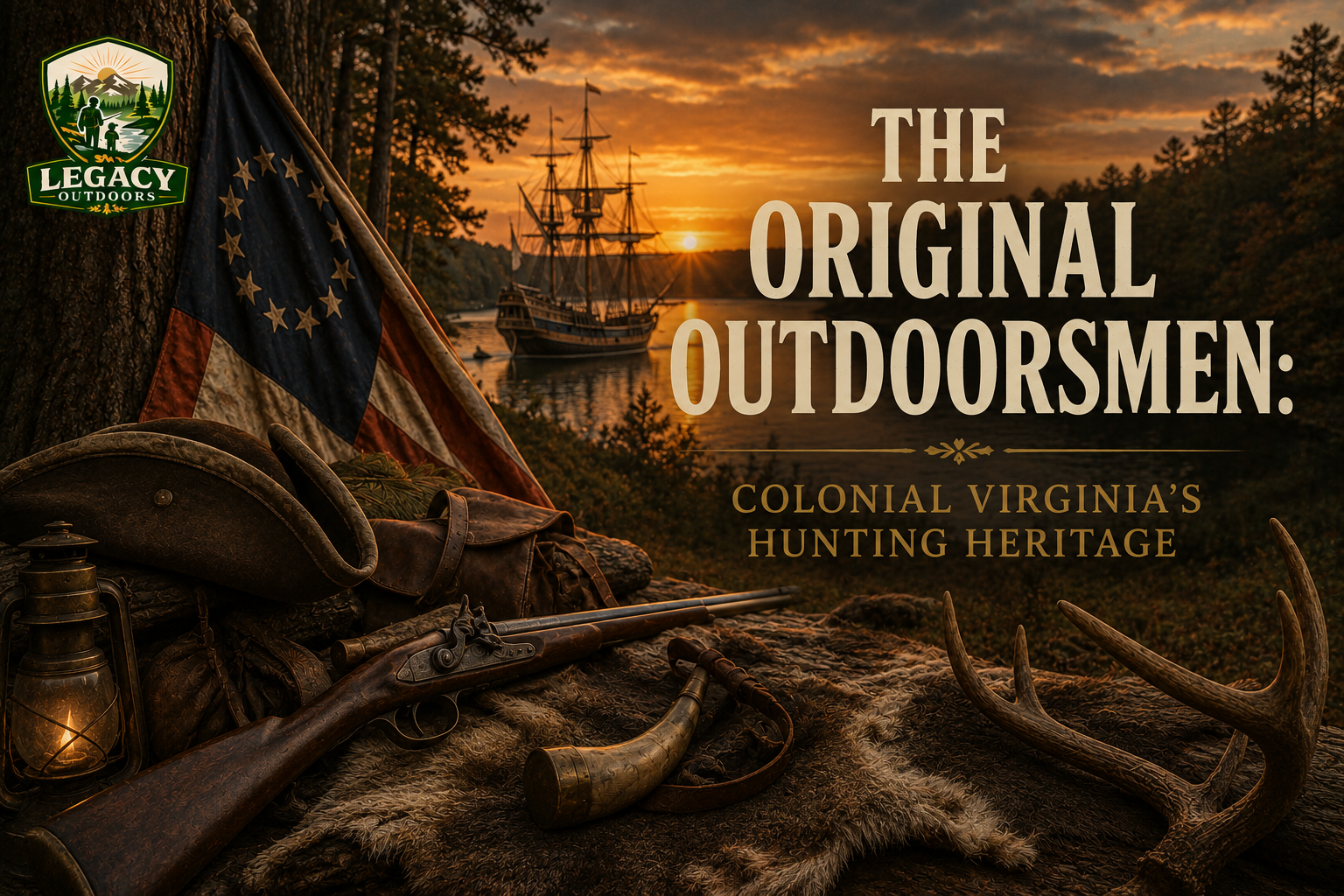
When people think of America’s first outdoorsmen, their minds often drift to mountain men in buckskin, western trappers, or pioneers crossing the Great Plains.
But centuries before the frontier stretched west, another generation of rugged men and women faced the wilderness with little more than faith, determination, and the tools they carried ashore.
While the English settlers first established a permanent colony at Jamestown in 1607, the nearby region that would later become Yorktown, Virginia, grew into one of colonial America’s most important settlements. Along the rivers and forests of the Virginia Peninsula, these early colonists learned a simple truth: survival depended on mastering the outdoors.
In many ways, they were America’s original outdoorsmen.
A Wilderness Unlike Anything They Had Known
The forests of colonial Virginia were dense and unfamiliar.
Towering hardwoods covered the landscape, rivers teemed with fish, and wildlife such as white-tailed deer, wild turkey, black bears, and waterfowl flourished in abundance. But these natural resources could not simply be taken for granted. Early settlers had to learn when to hunt, where to fish, and how to preserve food through changing seasons.
Without grocery stores or supply chains, every successful hunt and harvest could mean the difference between survival and starvation.
Learning From the Land—and Those Who Knew It
The first English colonists arrived with European traditions, but the environment demanded adaptation.
Many survival skills—such as local fishing methods, knowledge of native plants, and techniques for navigating the region’s waterways—were learned through observation and interaction with the Indigenous peoples who had lived on the land for generations.
These lessons, combined with the settlers’ own experience, helped shape an emerging outdoor culture rooted in resilience and resourcefulness.
Hunting to Feed a Colony
In the early years of Virginia, hunting was not sport.
Deer provided meat for the table and hides for clothing and equipment. Wild turkeys and waterfowl supplemented diets that often depended heavily on what could be harvested from nearby forests and marshes.
Every outing into the woods carried risks. Hunters traveled through unfamiliar terrain, faced unpredictable weather, and relied on primitive firearms or bows that demanded patience and skill.
Their success sustained families and communities alike.
Rivers That Sustained a Nation
The York River and its surrounding waterways became lifelines for the growing colony.
Fish, oysters, crabs, and other seafood offered dependable sources of nourishment. Small boats allowed settlers to travel, trade, and explore while opening access to productive fishing grounds.
The rhythms of tide and season became as important as calendars, teaching colonists to live in harmony with the natural cycles around them.
Faith on the Frontier
For many settlers, survival was inseparable from faith.
The uncertainty of colonial life fostered a reliance on God’s providence. A successful harvest, a safe return from the woods, or protection through a harsh winter was often viewed with deep gratitude and humility.
Though circumstances were difficult, many families found hope in Scripture and in the belief that the Creator who fashioned the forests and rivers also watched over those striving to build new lives within them.
That perspective resonates with many Christian outdoorsmen today, who see hunting and fishing not merely as recreation but as opportunities to appreciate God’s handiwork and exercise responsible stewardship.
The Birth of an American Outdoor Tradition
As generations passed, the skills required for survival evolved into traditions passed from parent to child.
Marksmanship, woodsmanship, fishing, trapping, and self-reliance became defining characteristics of frontier families. These values would spread across the Appalachian Mountains and eventually accompany pioneers as the nation expanded westward.
The outdoor heritage celebrated today has deep roots in those early colonial experiences.
Yorktown: From Settlement to Symbol
Yorktown would later earn lasting fame as the site of the decisive 1781 victory that effectively secured American independence.
Yet long before cannons echoed across its fields, the surrounding region had already witnessed another quiet triumph: ordinary people learning to thrive in a challenging wilderness through perseverance, hard work, and faith.
Their lives remind us that the foundations of America were built not only in meeting halls and battlefields but also in forests, rivers, farms, and hunting camps.
Carrying the Legacy Forward
Modern sportsmen benefit from advanced equipment, managed wildlife populations, and access to information unimaginable to the early colonists.
Even so, the heart of the outdoor experience remains unchanged.
It is found in rising before dawn, providing for one’s family, respecting the land, and teaching the next generation to value both freedom and responsibility.
The original outdoorsmen of colonial Virginia left behind more than settlements and history books.
They left a legacy of resilience, stewardship, and appreciation for the natural world—a legacy that continues every time a father teaches a child to cast a line, a mother mentors a young hunter in firearm safety, or a family gathers around a table to give thanks for a meal provided from the land.
In that sense, their story is still being written.
Free. Delivered to your inbox.