
The Pirates Behind the Dunes: The Untold History of the Outer Banks’ Most Infamous Outlaws
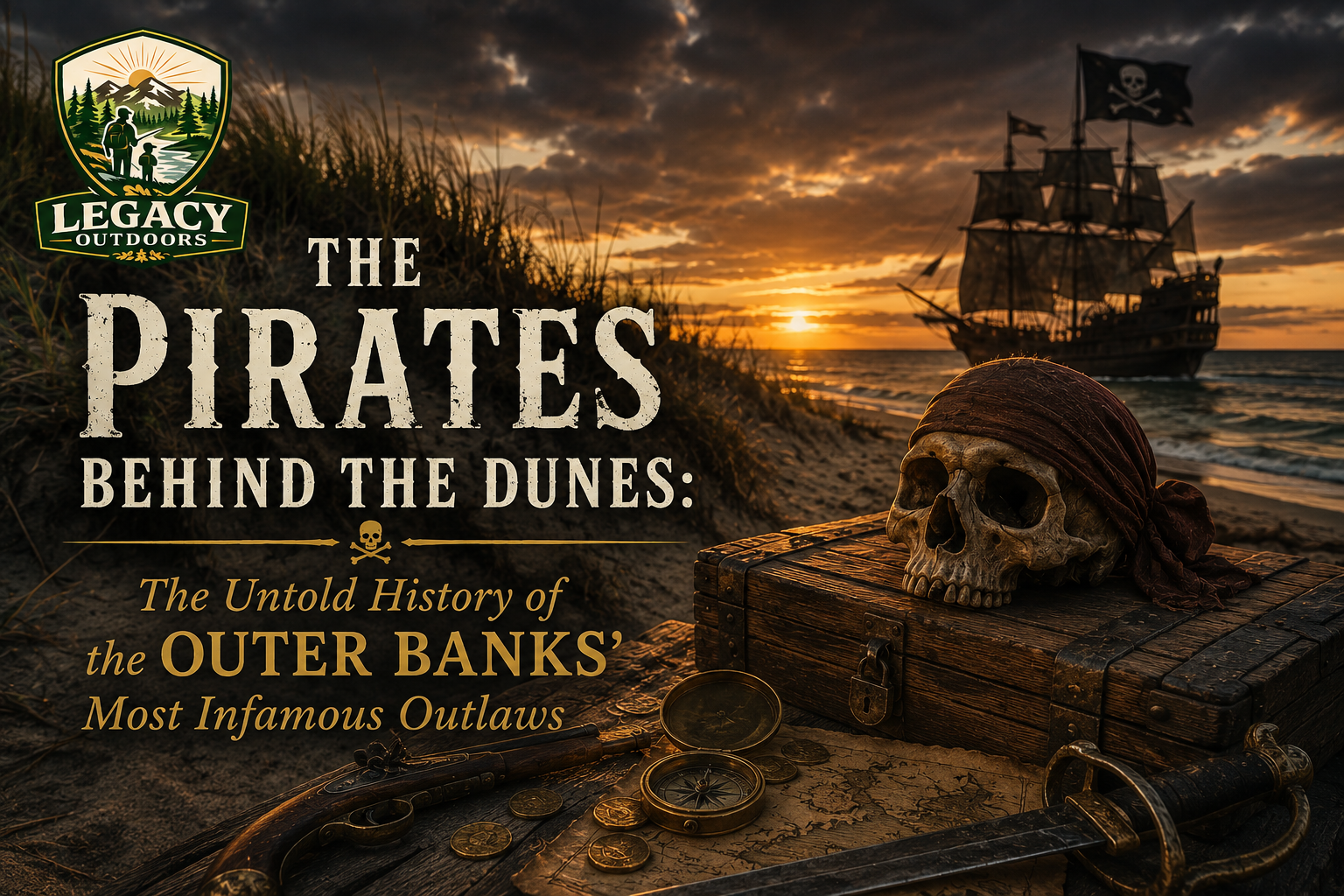
At sunrise, the beaches of North Carolina’s Outer Banks are peaceful. Fishermen cast into the surf, pelicans skim the waves, and sea oats sway in the wind that has shaped these barrier islands for centuries.
But three hundred years ago, these same dunes concealed a far different sight.
Beyond the shifting sands and hidden inlets, black sails appeared on the horizon. Merchant captains gripped their spyglasses a little tighter, wondering if the approaching vessel carried honest traders—or pirates looking for their next prize.
The Outer Banks was more than a beautiful coastline. It was once one of the most dangerous stretches of water in the Atlantic.
A Coast Made for Outlaws
Long before GPS and marked shipping channels, the Outer Banks was a maze of shallow shoals, hidden sandbars, and narrow inlets. The waters claimed thousands of vessels over the centuries, earning the nickname “The Graveyard of the Atlantic.”
For pirates, those same hazards became an advantage.
Their shallow-draft ships could slip through passages that larger merchant vessels avoided. They found secluded anchorages behind the barrier islands where they could repair ships, divide stolen cargo, and disappear before authorities arrived.
The isolation of the region made it an ideal hideout.
Blackbeard’s Connection to the Carolina Coast
No pirate is more closely associated with the Outer Banks than Edward Teach, better known as Blackbeard.
Towering in stature and famous for weaving slow-burning fuses into his beard during battle, Blackbeard cultivated a terrifying reputation that often convinced ships to surrender without a fight.
After capturing dozens of vessels throughout the Caribbean and along the American coast, he frequently operated from the waters surrounding present-day North Carolina.
Historical accounts suggest he used the state’s shallow sounds and inlets as temporary refuges, taking advantage of local geography that larger naval ships struggled to navigate.
The Final Battle at Ocracoke
Blackbeard’s career came to a dramatic end in November 1718.
After repeated complaints from merchants, Virginia Governor Alexander Spotswood dispatched Lieutenant Robert Maynard of the Royal Navy to hunt down the pirate. The two forces met near Ocracoke Inlet in a fierce battle that became part of American legend.
Despite inflicting heavy casualties, Blackbeard was ultimately killed after sustaining numerous sword wounds and gunshot injuries during hand-to-hand combat.
His severed head was displayed from Maynard’s ship as proof that one of history’s most feared pirates had finally fallen.
More Than One Pirate Haven
While Blackbeard dominates popular imagination, he was hardly the only outlaw to exploit the Carolina coast.
The region’s hidden coves and isolated waterways attracted smugglers, privateers, and lesser-known pirates who preyed on merchant traffic moving between the Caribbean and the American colonies.
Many local legends tell of buried treasure hidden beneath dunes or in maritime forests. Though no verified pirate cache has ever been uncovered in the Outer Banks, the stories persist, adding to the mystique of the region.
Shipwrecks and Legends
The same waters that sheltered pirates also destroyed countless vessels.
Storms, shifting shoals, and navigational errors left hundreds of ships stranded or sunk along the coast. Divers and historians continue to study these wrecks, uncovering artifacts that tell stories of commerce, conflict, and survival.
Some discoveries have fueled speculation that pirate ships remain undiscovered beneath the sands and shallow waters, waiting for future archaeologists to reveal their secrets.
From Pirate Coast to Sportsman’s Paradise
Today, the Outer Banks is known less for piracy than for world-class fishing, waterfowl hunting, surfing, and maritime heritage.
Charter boats depart before dawn in pursuit of tuna and marlin. Kayak anglers explore quiet marshes where smugglers may once have hidden. Families visit historic lighthouses that now guide vessels safely through waters that once favored lawless men.
The transformation reflects a broader truth: landscapes endure long after the people who once shaped them have vanished.
The Stories Hidden in the Sand
For outdoorsmen, the appeal of the Outer Banks extends beyond its exceptional fishing and coastal beauty.
Every windswept dune and forgotten inlet holds echoes of another era. Standing on a quiet beach at sunset, it’s not difficult to imagine a distant sail appearing on the horizon or a pirate crew slipping ashore under cover of darkness.
History lingers here—not in grand monuments, but in the rhythm of the tides and the whispers of local legends passed down through generations.
Protecting the Coast We’ve Inherited
The pirates who once exploited the Outer Banks have long disappeared, but the responsibility to care for these remarkable islands remains.
Conservation efforts protect fragile dunes, nesting sea turtles, migratory birds, and fisheries that sustain both wildlife and local communities. Visitors who respect the land and sea help preserve the same coastline that has inspired explorers, fishermen, and storytellers for centuries.
The greatest treasure of the Outer Banks was never hidden in a chest of gold.
It is the enduring beauty of a wild coast where history, adventure, and the outdoors continue to meet beyond the dunes.
Free. Delivered to your inbox.