The Potomac River: The Waterway That Helped Build America and Still Calls to Anglers Today
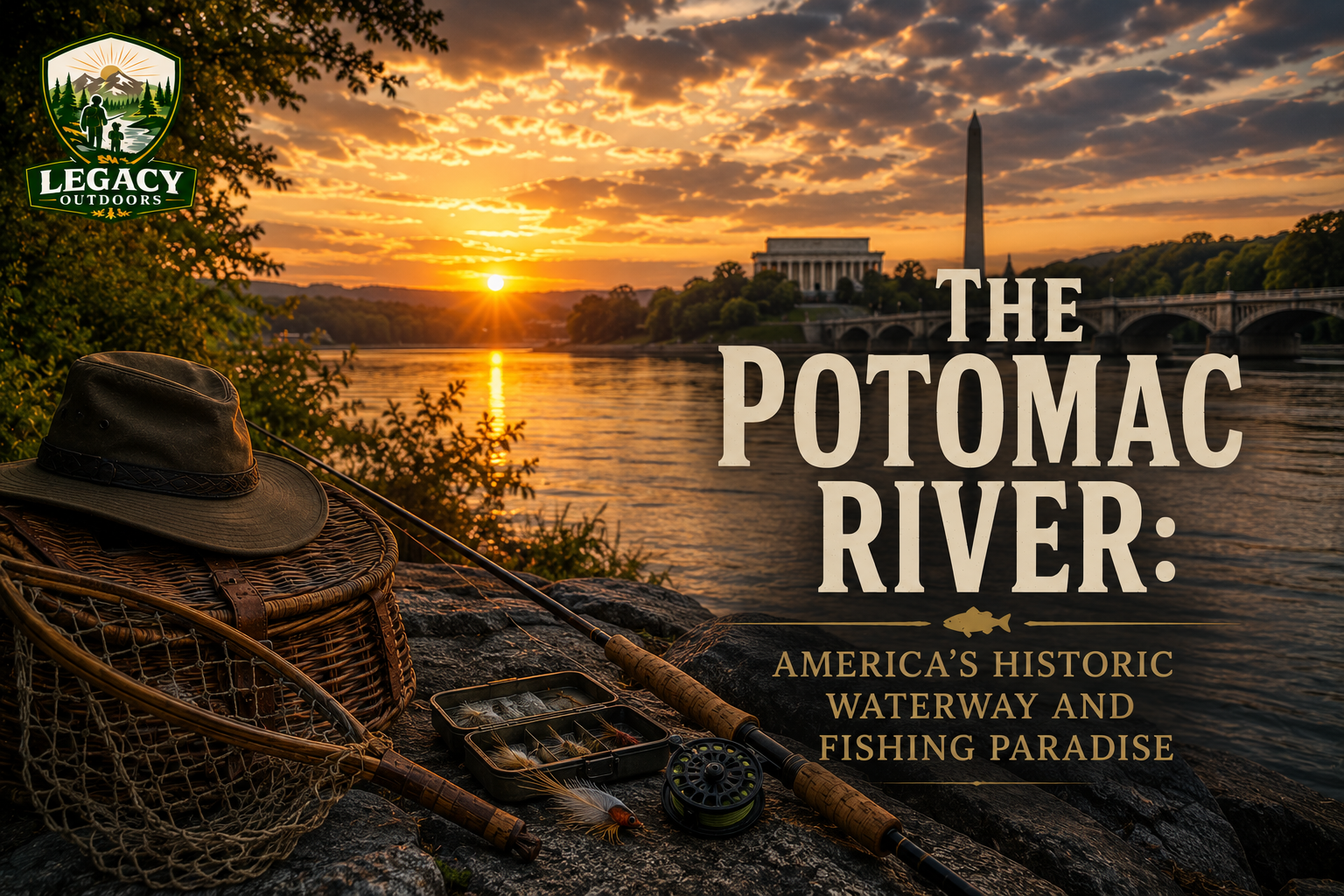
Long before highways crisscrossed the East Coast and railroads connected cities, there was a river that carried explorers, settlers, soldiers, merchants, and dreamers into the heart of a young nation.
That river was the Potomac.
Flowing more than 400 miles from the Allegheny Mountains to the Chesapeake Bay, the Potomac has played a vital role in American history for centuries. It helped sustain Indigenous communities, supported colonial settlement, witnessed the birth of a nation, and today stands as one of the premier fishing destinations on the East Coast.
For outdoorsmen, the Potomac is more than a river.
It is a living link between America’s past and present.
A Highway Before Roads Existed
Before paved roads and modern transportation, waterways were the fastest and most reliable means of travel.
The Potomac served as a critical corridor for trade and exploration, allowing settlers to move goods, establish farms, and build communities along its banks. Early colonists relied on its waters for drinking, transportation, fishing, and commerce, while nearby ports became centers of economic activity in colonial Virginia and Maryland.
The river’s importance was not lost on George Washington, who envisioned it as a gateway connecting the Atlantic coast with the growing western frontier.
A River Rich in Natural Resources
The Potomac has always been generous to those willing to work its waters.
For thousands of years, Indigenous peoples harvested fish, shellfish, and other resources from the river and its tributaries. Colonial settlers followed, relying on abundant fisheries to supplement their food supply.
Today, that same abundance continues to attract recreational anglers from across the country.
From rocky upstream stretches to broad tidal waters near the Chesapeake, the Potomac offers remarkable diversity for fishermen of every skill level.
One of America’s Premier Bass Fisheries
Mention the Potomac to competitive anglers, and one species immediately comes to mind: largemouth bass.
The tidal sections of the river are nationally recognized for producing outstanding bass fishing, regularly hosting major tournaments and drawing professionals eager to test their skills among expansive grass beds, docks, and creek mouths.
Seasonal tides add another layer of strategy, rewarding anglers who understand how moving water influences fish behavior.
It’s one of the few fisheries where every cast has the potential to produce a tournament-winning catch.
More Than Just Bass
While bass receive much of the attention, the Potomac supports an impressive variety of fish species.
Depending on location and season, anglers may encounter:
Smallmouth bass
Largemouth bass
Striped bass
Blue catfish
Channel catfish
Flathead catfish
White perch
Snakehead
Crappie
Sunfish
Its combination of freshwater and tidal habitats creates opportunities throughout the year for bank fishermen, kayak anglers, and boaters alike.
Bald Eagles and Scenic Beauty
Fishing the Potomac often feels like stepping into a nature documentary.
Bald eagles soar overhead, osprey dive for fish, great blue herons stalk the shallows, and deer emerge along wooded shorelines at dawn and dusk. In quieter coves, the sounds of civilization fade behind birdsong and moving water.
The river reminds us that even near some of the nation’s busiest metropolitan areas, wild places still endure.
Conservation and Restoration
The Potomac has not always enjoyed the reputation it holds today.
During the mid-20th century, pollution and habitat degradation severely impacted water quality and fisheries. Through decades of conservation work, improved wastewater treatment, habitat restoration, and public stewardship, much of the river has experienced an impressive recovery.
Today’s thriving fisheries stand as evidence that responsible management and community involvement can restore valuable natural resources.
For sportsmen, this success story reinforces an important lesson: conservation works.
Lessons Beyond the Water
Every outing on the Potomac offers more than the chance to catch fish.
Parents teach children to cast from public parks. Friends spend quiet mornings drifting with the current. Veterans revisit favorite coves where they learned to fish decades earlier.
The river becomes a classroom where patience, perseverance, gratitude, and stewardship are practiced one cast at a time.
These experiences often outlast memories of individual catches.
A Legacy Worth Preserving
The Potomac has witnessed Native American history, colonial expansion, the founding of the United States, the Civil War, and the growth of the modern nation.
Yet despite centuries of change, it continues to provide opportunities for adventure and reflection.
As anglers launch their boats before sunrise or wade into cool mountain tributaries, they become part of a tradition stretching back generations—a tradition rooted in respect for the land, appreciation for God’s creation, and the responsibility to preserve these waters for those who follow.
The Potomac River helped shape America.
Today, it continues to shape the lives of those who answer its call with a fishing rod in hand.
Free. Delivered to your inbox.